
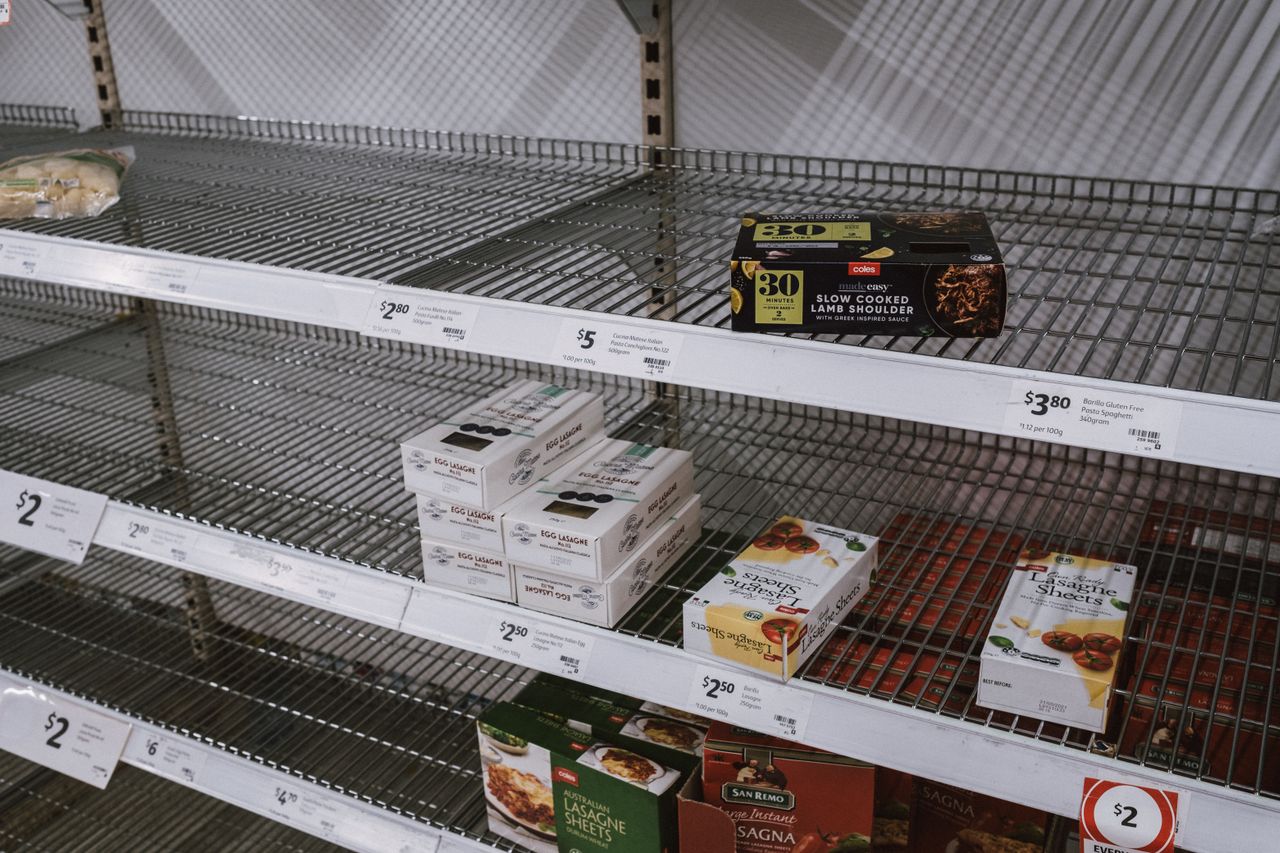
A global famine would not hit every country at the same speed. Some nations could stretch local harvests for months, while others would feel shortages almost immediately.
The biggest dividing line is not wealth alone. It is how much food a country can produce for itself when trade stops working.
Import dependence is the first red flag
The countries most likely to run out of food first are those that rely heavily on imported staples while lacking enough arable land, freshwater, or domestic farming capacity to replace them. Small island states are especially exposed. FAO data has long shown that Small Island Developing States carry very high cereal import dependency, and recent food-security research describes them as structurally vulnerable because of remoteness, thin supply chains, and limited agricultural space.
Singapore is one of the clearest examples. The Singapore Food Agency says the country imports more than 90% of its food, a striking figure for a wealthy and highly efficient economy. That does not mean Singapore is poorly managed; in fact, it has invested aggressively in stockpiles, supplier diversification, and its “30 by 30” production strategy. But in a truly global famine, even excellent logistics cannot fully compensate if exporters restrict shipments at the same time.
Other import-reliant states would face similar danger for different reasons. Japan remains far richer and more technologically advanced than most vulnerable countries, yet its calorie-based food self-sufficiency ratio was still only 38% in fiscal 2024/25, according to reporting on official MAFF data. That means a severe, synchronized disruption in grain, feed, and seafood flows would leave Japan under pressure far faster than land-rich agricultural exporters such as the United States, Canada, or Australia.
Conflict and poverty turn import dependence into catastrophe
Import dependence becomes far deadlier when a country is also poor, indebted, or at war. Yemen is a classic case. Even before any hypothetical global famine, the country has been heavily reliant on imports for basic food needs, while conflict, fuel shortages, damaged infrastructure, and shipping risks have repeatedly made those imports harder to finance and distribute.
Haiti illustrates another version of the same trap. The country does produce food domestically, but not enough to shield itself from repeated shocks, and the breakdown of transport and markets can make food physically unavailable even when supplies exist somewhere in the system. FAO’s recent country brief says nearly 5.7 million people in Haiti were projected to face acute food insecurity in late 2025 into early 2026, showing how quickly a fragile nation can move toward crisis without any worldwide crop failure.
This is why the “run out first” list would likely include countries such as Yemen, Haiti, and several import-dependent island nations before it includes better-governed but trade-reliant states. Money matters, but only up to a point. In a global scramble, exporters may prioritize domestic consumers, insurers may price ships out of risky routes, and poorer governments may simply lose bidding wars for wheat, rice, and cooking oil.
The first to run out are not always the ones people expect
Many people assume the first countries to fail would be those with the lowest incomes, but the real pattern is more specific. The most exposed countries usually combine three weaknesses at once: low self-sufficiency, high exposure to imported staples, and weak ability to absorb price spikes. A nation can survive one of those problems. Facing all three during a global famine is far more dangerous.
That is why wealthy city-states, tourism-driven islands, and conflict-hit importers belong in the same conversation. A country with cash but almost no farmland can struggle if global supply disappears. A country with farmland but chronic violence can struggle if crops cannot move safely from fields to ports and cities. And a country with both limitations can deteriorate with shocking speed.
If a true global famine ever arrived, the first places to run short would likely include small island states in the Caribbean and Pacific, conflict-ravaged importers such as Yemen, and structurally food-dependent economies such as Singapore and, under an extreme scenario, Japan. The lesson is blunt: famine risk is not only about how much food the world grows. It is about who can still get it when everyone else is desperate.