
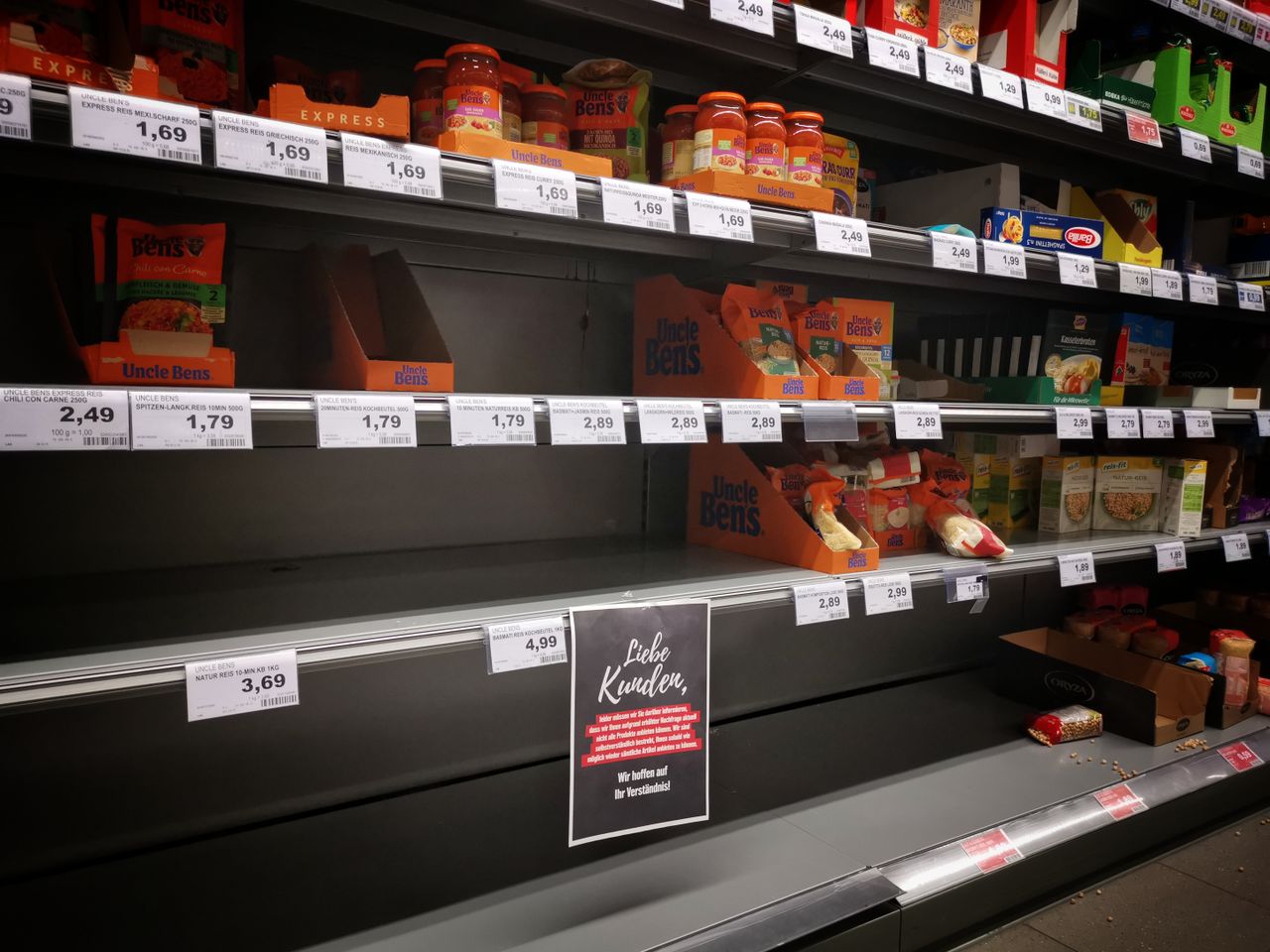
Some grocery disappearances happen with a big recall or a loud brand announcement. More often, products simply lose shelf space, get reformulated, or vanish after one last reset.
That quiet churn is reshaping the modern supermarket. The biggest losers are often the items that no longer fit how Americans shop, eat, or judge value.
Plant-based meat is losing its once-premium real estate
A few years ago, plant-based burgers and sausages seemed destined to dominate the meat case. Now the category is clearly retreating, especially in its refrigerated form. Food Business News reported that some major retailers moved Beyond Meat products out of the fresh meat case and into frozen, a shift the company said disrupted availability and helped drive an 11% volume decline in the first quarter of 2025.
The broader numbers point in the same direction. According to reporting on The Good Food Institute’s 2026 State of the Industry data, U.S. plant-based sales fell for a second straight year, with dollar sales down 2% from 2024 to 2025 and unit sales down 3%. That is not a full-category collapse, but it is enough to force retailers to trim weaker SKUs.
What disappears first are usually the niche extensions: specialty crumbles, premium flavored patties, or duplicate sizes that take up too much cooler space. Retailers increasingly prefer fewer, clearer options that turn faster. In a store environment where every chilled slot has to earn its keep, underperforming alternatives rarely get endless patience.
For shoppers, that means the category may not vanish entirely, but its old footprint is not coming back. Expect fewer experimental launches, less refrigerator-space dominance, and a stronger push toward frozen formats that are easier for stores to manage.
Hard seltzers, craft spinoffs, and fringe drink variants are being cut back
Beverage shelves still look crowded, but the mix is getting tighter. Brewbound, citing Bump Williams Consulting and NIQ data, reported that total beer SKUs at off-premise retailers fell 6% in 2024, with hard seltzer suffering the steepest contraction at 12%. That is a major clue about what happens when a trend matures and retailers stop rewarding endless flavor proliferation.
The same logic applies across grocery beverage aisles. Limited flavors, seasonal experiments, and line extensions without repeat demand may get a brief run, but many never survive the next assortment review. Even large beverage companies are leaning toward sharper portfolio management, focusing on proven drinking occasions rather than maintaining every novelty launch indefinitely.
Coca-Cola’s recent North American strategy illustrates the point. The company continues to launch selective flavors and limited-time products, but those releases are tightly tied to specific campaigns and occasions rather than permanent shelf expansion. In other words, the modern beverage aisle increasingly favors rotation over accumulation.
That means shoppers should not assume a favorite oddball soda, sparkling water flavor, or alcoholic crossover drink will remain available just because it showed up nationwide once. When velocities soften, shelf space gets reassigned quickly, and most fringe beverage variants do not earn a second life.
Old-school pantry holdovers are being squeezed by simplification
The quietest losses are often in the center store. Pantry categories such as canned fruit variants, specialty baking goods, lesser-known cookies, and slow-moving frozen meals are under pressure as manufacturers simplify portfolios and retailers reduce duplication. Shoppers may still see a full aisle, but the number of distinct products inside it is often shrinking.
Some of this is structural. The FDA announced in July 2025 that it was revoking or proposing to revoke 52 obsolete food standards of identity, many involving canned fruits, vegetables, dairy products, baked goods, and macaroni products. That does not mean those foods disappear overnight, but it reflects a wider industry reality: older, highly specific product definitions and marginal formats are losing relevance.
Manufacturers are also making sharper choices. J.M. Smucker said its 2025 results reflected divestitures that included the Voortman business and certain sweet baked snack value brands. Conagra, meanwhile, has emphasized multi-year portfolio modernization across frozen and retail lines, signaling that legacy products increasingly must justify their place.
The practical result is familiar to anyone who has hunted for a once-common item and found only a broader mainstream substitute. The disappearing six are less about one exact brand list than a retail pattern: refrigerated plant-based meat, hard seltzer spinoffs, fringe soda flavors, niche canned goods, slow-selling frozen meals, and secondary cookie or snack lines. Once those products lose shelf velocity, they usually do not come back.
It’s vvery easy to find ouut any toipic on net aas comparedd tto books,
as I foumd tis post att this website. ofvd9wuaptt0xc584d6u