
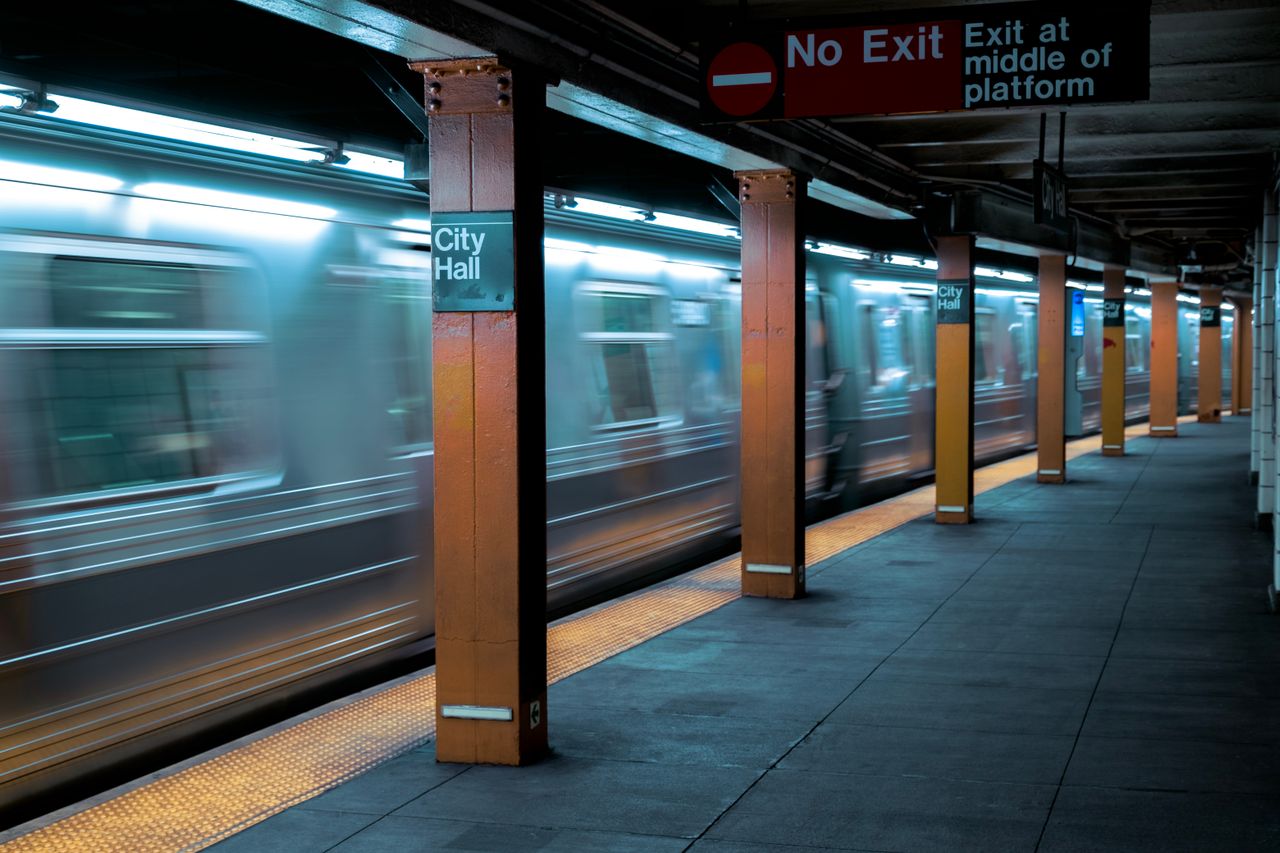
Few abandoned places in New York feel as grand as this one. The old City Hall station is not a ruin in the usual sense, but a sealed architectural showpiece hiding in plain sight beneath one of the busiest cities on earth.
The station that launched a city-changing system
When New York’s first subway opened on October 27, 1904, the inaugural ride departed from City Hall station in Lower Manhattan. According to the New York Transit Museum, that first Interborough Rapid Transit line stretched 9.1 miles and opened with 28 stations, marking the beginning of a network that would permanently reshape how the city moved and grew. What started as a bold civic project quickly became the backbone of modern New York.
City Hall was designed to impress from the start. The station was the ceremonial southern terminal of the original IRT, and its architecture reflected the era’s confidence in public works. Rather than treat transit as purely functional, designers George Heins and Christopher LaFarge created a space that felt almost cathedral-like, using elegant curves and rich decorative detail to signal that the subway was a source of public pride.
That ambition still reads clearly today. The New York Transit Museum describes the station as the “jewel in the crown” of the system, and the phrase fits. Rafael Guastavino’s vaulted tile ceilings, leaded glass skylights, chandeliers, and dramatic arched forms gave commuters a level of beauty almost unimaginable in a contemporary transit build.
Why City Hall station was closed and left behind
For all its beauty, City Hall was not especially practical for the subway system that grew around it. The station’s sharply curved platform, while visually striking, became a limitation as trains lengthened and ridership increased. Riders could still use nearby Brooklyn Bridge station, which offered easier transfers and more convenient access, making City Hall increasingly redundant as the system evolved.
The station was decommissioned in 1945, but not because it had fallen apart. It closed because operations had outgrown its original design. As train technology improved and passenger volumes surged, the old terminal could no longer compete with the demands of a faster, larger, more utilitarian subway. In other words, New York did not abandon the station because it failed aesthetically; it abandoned it because the city had become too big for its elegance.
Even after closure, the space never fully disappeared. The New York Transit Museum notes that the station remains active as a turnaround point for the 6 line, which is one reason it has survived in such remarkable condition. That unusual afterlife has helped preserve details that would likely have vanished had the site been demolished or heavily rebuilt.
Why the abandoned station still fascinates visitors
Part of the station’s hold on the public imagination is simple contrast. New Yorkers know the subway as loud, crowded, fluorescent, and relentlessly practical. City Hall offers the opposite: soft curves, filtered light, ornamental craftsmanship, and a sense of theatrical calm that feels closer to a historic civic hall than a piece of transit infrastructure.
It also stands as a reminder of an earlier philosophy of urban design. In the early 20th century, leaders wanted major public spaces to communicate dignity and ambition. City Hall station embodied that ideal, turning a daily commute into an encounter with art, engineering, and ceremony. That helps explain why the site has become one of the system’s most mythic spaces despite being inaccessible to ordinary riders.
Today, the station can be visited only through limited New York Transit Museum member tours, with the museum currently listing exclusive guided access for members rather than general walk-in admission. That scarcity has only deepened its allure. Hidden below street level, still intact and still beautiful, New York’s first subway station remains proof that infrastructure can outlive its function and endure as something rarer: a work of public art.