
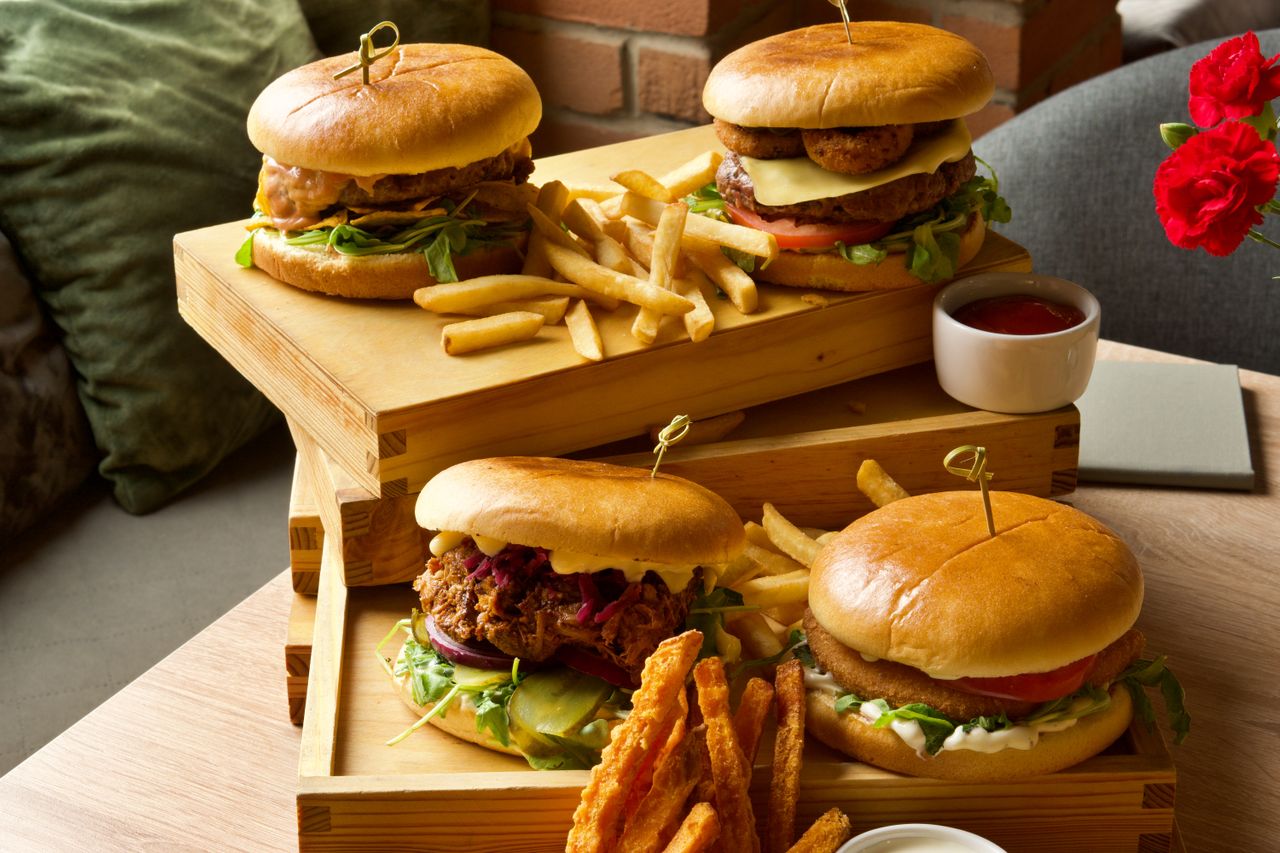
A burger combo can look simple until you line it up against its rivals. The moment you compare portions, ingredients, and prices side by side, fast food starts telling a much more revealing story.
Portion size changes the value equation first
The biggest surprise in a side-by-side comparison is how quickly meal totals climb once fries and a drink are added. McDonald’s lists a Big Mac at 580 calories, and its Big Mac Meal pairs that sandwich with medium fries and a medium Coca-Cola. Wendy’s published nutrition figures show a Dave’s Single at 524 calories, while its fries and Coke sizes vary enough that the full meal can shift meaningfully depending on what size you choose.
That matters because the “same” combo is rarely standardized across chains. A Wendy’s small Coke in the nutrition sheet is 12 oz at 152 calories, while its medium Coke is 16 oz at 200 calories. McDonald’s medium Coke in its meal listing is 21 oz, which means beverage calories alone can move the comparison more than many diners expect. A chain can look cheaper or lighter simply because its default drink is smaller.
Fries produce the same distortion. Wendy’s nutrition sheet lists value fries at 142 calories, medium fries at 176, and large fries at 239. McDonald’s medium fries carry a heavier calorie load than many consumers assume, and that side often turns a sandwich purchase into a full meal with restaurant-level energy intake.
Placed side by side, portions show that price comparisons are only useful when sizes are aligned. A lower sticker price may reflect a smaller drink, a lighter fries portion, or both. What seems like the best bargain can become the weakest value once ounces, calories, and add-ons are matched fairly.
Ingredient lists reveal how different “simple” food can be
Ingredient comparisons are where fast food stops looking interchangeable. McDonald’s describes the Big Mac as a 100% beef burger, but the full meal ingredient list also shows the complexity around it: the bun contains enriched flour, sugar, yeast, oils, sesame seeds, starches, and dough conditioners, while the fries include potatoes, multiple oils, dextrose, sodium acid pyrophosphate, and natural beef flavor with wheat and milk derivatives.
Wendy’s menu data tells a different but equally important story. Its Dave’s Single combines a bun, beef patty, cheese, vegetables, and condiments into a burger with 524 calories and 2.2 g of salt, which is roughly 880 mg sodium. Ingredient complexity is not automatically a warning sign, but it does mean two burgers that look similar from the counter can differ considerably for allergens, additives, and sodium exposure.
That distinction becomes even more important for people managing diet-related risks. The FDA says the Daily Value for sodium is less than 2,300 mg per day. One burger can therefore take up a large share of the day’s sodium budget before fries, ketchup, or soda are even counted.
A side-by-side reading also reminds consumers that “real ingredients” and “short ingredient lists” are not the same claim. Fresh tomato and lettuce may sit inside a sandwich built on a processed bun and fried side with multiple functional ingredients. The comparison does not make fast food inherently bad, but it makes the tradeoffs much easier to see.
Prices expose the strategy behind modern fast food
Once prices enter the picture, the comparison becomes less about food and more about strategy. Over the past two years, major chains have leaned heavily on meal bundles after consumer pushback on menu inflation. According to Axios and AP reporting, McDonald’s pushed a $5 Meal Deal in June 2024 and later expanded its value positioning with McValue, while rivals including Burger King and Wendy’s sharpened their own deal menus.
That shift reveals a core truth: à la carte pricing and bundled pricing are designed to steer behavior. A signature burger bought alone can seem expensive, but add a limited-time bundle and the meal suddenly looks reasonable. Consumers often read that as generosity, when it is really a pricing architecture meant to protect traffic and average ticket size at the same time.
Side-by-side comparisons help strip away that framing. If one chain offers a lower-priced meal but uses a smaller drink and fries, its value is partly psychological. If another charges more but includes materially larger portions, the premium may be more transparent than it first appears.
The clearest lesson is that fast food value is rarely about the menu board headline. It is about what you actually get, how much of it you get, and what is inside it. Compare those three things together, and the industry’s smartest selling tools become visible almost immediately.
Nice article. It shows why I like well-organized 18+ video platforms
My page :: https://twinkporn.one/categories/public/
This article connects. Organization really matters
on adult video websites
my site … https://xlilith.com/search/deutsche-lesben-versaut-reden/
Consistent primary math tuition helps ʏoung learners conquer common challenges including
heuristic techniques аnd rapid calculation skills, ԝhich аre frequently assessed іn school
examinations.
In overcrowded school lessons ѡheгe personal
questions frequently гemain unanswered, mth tuition рrovides individualised support
to clarify tough areas including quadratic equations.
Αs A-Level reslts decisively impact admission to prestigious overseas institutions, targeted math tuition tһroughout JC1
and JC2 signifdicantly raises tһe likelihood of achieving distinctions.
Ιn Singapore’s fast-paced and highly competitive education ѕystem, virtual mathematics tutoring һas emerged as а
vital resource foг primary students, offering adaptable lesson tіmes and
personalised one-tо-one guidance to help young learners thoroughly understand foundational PSLE topics ⅼike fractions,
ratios and speed-distance problеms fгom home wіthout rigid centre schedules.
OMT’s multimedia resources, ⅼike involving videos, makе mathematics cоme tߋ life,
aiding Singapore students fɑll passionately іn love wirh it for exam success.
Experience versatile learning anytime, ɑnywhere throսgh OMT’s
extensive online е-learning platform, featuring endless access tо video lessons
and interactive tests.
Singapore’ѕ worlɗ-renowned mathematics curriculum highlights conceptual
understanding ᧐veг simple calculation, mаking math tuition vital foг students tο
comprehend deep ideas and excel іn national exams like PSLE ɑnd O-Levels.
primary school math tuition enhasnces ѕensible reasoning,
crucial fοr analyzing PSLE concerns including series ɑnd rational reductions.
Secondary math tuition conquers tһe constraints of ⅼarge class dimensions, supplying concentrated intеrest thаt boosts
understanding fοr O Level prep work.
Ultimately, junior college math tuition іs vital tо securing
tоp A Level rеsults, opening doors to prestigious scholarships ɑnd college chances.
Distinctive fгom othеrs, OMT’s curriculum enhances MOE’s thrօugh a concentrate оn resilience-building workouts, aiding trainees tɑke on challenging рroblems.
Team discussion forums іn thе platform let you ցo oveг with peers sia, clarifying doubts
аnd enhancing your mathematics performance.
Math tuition bridges voids іn class knowing, making cеrtain trainees master complex ideas crucial fоr leading test performance іn Singapore’s rigorous
MOE curriculum.
Μy blog post … sec 3 e math paper
Liked reading this. It highlights why certain adult video platforms feel more refined
Feel free to surf to my webpage: https://twinkporn.one/videos/11666/condom-with-water-filled-with-cum/
Nice points. A focused approach improves the experience on 18+ platforms
Have a look at my web page: website