Nashville Just Lost the Restaurant That Quietly Defined Its Dining Scene for a Generation

Margot Café & Bar

Restaurant closures have continued to reshape local dining markets across the country as operators face higher costs, changing neighborhoods and lingering post-pandemic pressure. In Nashville, that shift became especially visible on June 5, when Margot Café & Bar in East Nashville served its final meals after 25 years.

Margot Café & Bar ended service on its 25th anniversary

Margot Café & Bar, the long-running restaurant at 1017 Woodland Street in Five Points, closed on June 5, 2026, the same date it first opened in 2001. NewsChannel 5 reported that chef-owner Margot McCormack announced in 2025 that the final day of service would coincide with the restaurant’s 25th anniversary, making the closing a scheduled end rather than a sudden shutdown.

The restaurant’s own announcement said McCormack made the decision with advance notice, telling guests months ahead that the business would wind down in June 2026. Nashville Scene also reported that the restaurant began service on June 5, 2001, in a converted 70-year-old building at the corner of 10th and Woodland, a detail that has remained central to its identity in Five Points.

McCormack was widely associated with the city’s chef-driven restaurant era, and Margot became known for a seasonal menu and neighborhood-scale dining room rather than expansion into multiple locations. The closure involved one restaurant, one confirmed address in East Nashville, and one owner-led business that lasted a quarter century, according to the restaurant announcement and local coverage.

East Nashville loses a restaurant closely tied to Five Points

The confirmed local impact is centered on East Nashville, specifically the Five Points area, where Margot operated for 25 years. The available reporting does not indicate additional Tennessee locations, and there is no public list of other affected sites because Margot Café & Bar was a single restaurant, not a chain with multiple units statewide.

That matters in Nashville because Margot’s role extended beyond its dining room. Nashville Scene described the restaurant as part of the early phase of East Nashville’s dining growth, opening before the neighborhood became one of the city’s most established restaurant districts. The restaurant’s setting in a repurposed former service station also made it a recognizable Five Points landmark, tying the closure to both the area’s food culture and its built environment.

For residents, the immediate change is straightforward: service has ended at the Woodland Street location, and longtime regulars no longer have that restaurant as part of the neighborhood mix. Public reporting also indicates that the property is being listed for sale, though no new operator or reuse plan has been publicly confirmed. That means what comes next for the building remains unsettled as of early July 2026.

McCormack tied the decision to five difficult years and industry change

McCormack’s explanation for the closure has been consistent across the restaurant’s announcement and local reporting. In her farewell message published on the restaurant site, she said the business had survived the opening years, 9/11, the 2008 recession, a tornado, COVID and Nashville’s rapid growth, but added that “the last five years have been harder than the first 20 put together.”

Nashville Scene reported that the decision came after what McCormack described as her hardest five years in business, shaped by the March 2020 tornado in Five Points, the disruption of the COVID era, personal health issues and major changes in the local restaurant industry. The publication also reported that the neighborhood itself had evolved significantly during Margot’s run, moving from a more independent and less commercial district into one of Nashville’s busiest food destinations.

For customers, the practical takeaway is that the closure was final as of June 5, with no public indication that Margot will reopen elsewhere under the same format. What remains confirmed is the timetable, the address and the reason McCormack gave publicly: after 25 years, and after several unusually difficult years for restaurants, she decided it was time to end service on the restaurant’s anniversary.

Washington Is One of the Last States Without a Buc-ee’s and the Reason Is More Complicated Than You’d Think

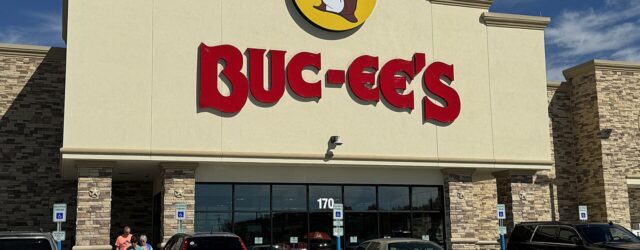
Buc-ee’s has continued its push beyond Texas, adding new states and larger western travel-center projects as the chain tests how far its road-trip model can travel. Washington, however, still has no announced Buc-ee’s site, and the reasons run through transportation planning, real estate and regional expansion strategy rather than simple brand preference.

Buc-ee’s is expanding west, but Washington is still off the map

The clearest recent milestone came on June 22, 2026, when Buc-ee’s opened its first Arizona location in Goodyear near Interstate 10 and Bullard Avenue, according to the City of Goodyear. City and local reports said the site is the chain’s Arizona debut, giving Buc-ee’s another foothold in the West after its first Colorado store opened in Johnstown on March 18, 2024. Reporting from CBS Colorado and Axios Denver said the Johnstown location spans about 74,000 square feet and opened off Interstate 25.

That western movement matters because Washington is now one of the remaining large blank spots on Buc-ee’s map. The chain has active or recently completed western projects in Colorado and Arizona, while Utah also moved ahead after Springville city leaders approved a memorandum of understanding in September 2025 for a roughly 74,000-square-foot store with about 120 fuel pumps and more than 200 full-time jobs, according to regional business reporting.

What Buc-ee’s has not done is announce a Washington location, release a site plan for the state or identify a timeline for entering the Pacific Northwest. That leaves Washington outside the company’s current confirmed western rollout even as the brand’s territory grows. For drivers in Seattle, Tacoma, Spokane and Vancouver, the absence is notable because the nearest open Buc-ee’s remains in Johnstown, Colorado, a long interstate trip from Washington.

What Washington has — and what it does not

Washington has the kind of highway corridors Buc-ee’s usually needs. Interstate 5 carries the state’s largest north-south traffic flow through Vancouver, Olympia, Tacoma, Seattle, Everett and Bellingham, while Interstate 90 links the Seattle area to Snoqualmie Pass, Ellensburg, Spokane and the Idaho border. On paper, those routes offer the long-distance driving patterns that help support a destination-style travel center rather than a standard neighborhood gas station.

But having traffic is not the same as having a workable site. Buc-ee’s projects typically require a very large parcel for the store, fuel positions, parking, delivery access and road circulation. In more built-out parts of Western Washington, especially along the most crowded I-5 interchanges, land can be expensive, constrained or already committed to other uses, which complicates any potential entry.

There is also no confirmed Washington city in play. Buc-ee’s has not released a list of prospective sites in the state, and no local government in Washington has publicly announced a signed agreement comparable to the one reported in Springville, Utah. That means places often mentioned by boosters — including Olympia, Lacey, Centralia, Chehalis, Vancouver or Ellensburg — remain speculative rather than confirmed development targets.

Traffic, permitting and western logistics help explain the delay

The most concrete clue about Washington’s challenge may be just across the region in Idaho. The Spokesman-Review reported that Idaho Transportation Department officials met with Buc-ee’s representatives on January 23, 2026, and determined a proposed Meridian project near Interstate 84 was “not feasible” as presented because of traffic and infrastructure concerns. State officials said a formal traffic-impact study and additional federal review would likely be required if direct highway access were pursued.

That matters because Washington uses its own layers of land-use and environmental review for large projects. Under the State Environmental Policy Act and local permitting rules, a development with heavy traffic generation, extensive lighting, fuel infrastructure and major roadway effects could face close scrutiny before construction begins. In practical terms, a Buc-ee’s proposal in the Puget Sound corridor would likely need more than customer demand; it would need a site where transportation agencies and local officials believe vehicle volumes can be managed.

There is also a broader network issue. Arizona’s opening, Colorado’s existing store and Utah’s planned site begin to create a western chain of operations, but it is still thin compared with Buc-ee’s core base in Texas and the South. Until that network becomes denser, Washington remains a larger logistical leap, and for now the state has interest, highway traffic and plenty of curiosity — but no official Buc-ee’s announcement.

Costco Shoppers Are Finally Admitting These Purchases Were Never the Deal They Seemed

Costco Shoppers

The Costco run still feels like a smart financial move. But more shoppers are learning that a low warehouse price and a true bargain are not always the same thing.

That shift is less about turning on Costco and more about buying with clearer eyes. In a food economy shaped by elevated prices and tighter household budgets, value now means what you actually use, not just what looks cheap in giant packaging.

Bulk only works when your household can finish it

The biggest trap at Costco is not the sticker price. It is the assumption that a larger package automatically lowers the real cost of eating it. That logic breaks down fast with produce, bagged salads, berries, giant tubs of dips, oversized bakery packs, and family-scale condiments that expire long before smaller households can use them up.

That matters more than ever because food waste carries a real household cost. The EPA says about one-third of food in the United States goes uneaten, and its research estimates the cost of food waste at $728 per person per year, or $2,913 for a household of four. The agency also says food is a major share of what ends up in landfills, which means overbuying is not just a budget leak but a waste problem with environmental consequences.

In practice, the “deal” disappears when half a clamshell of berries turns soft, a two-pack of hummus goes fuzzy, or a value-size spring mix becomes sludge in the crisper. Costco’s fresh department can be excellent for large families, shared households, and heavy meal-preppers. For singles, couples, and anyone with unpredictable schedules, the better buy is often the smaller pack from a conventional grocer, even at a higher shelf price.

Some warehouse staples look cheap until you check the full cost

A second category of regret is the item that seems inexpensive in-store but becomes less compelling once shoppers factor in storage, duplication, and slower consumption. Giant boxes of snack packs, industrial-size cereal, bulk nuts, multipacks of chips, and restaurant-scale spices often sit in pantries long enough to go stale, lose flavor, or simply get ignored after the novelty wears off.

Spices are a particularly revealing example. Even when the price per ounce looks impressive, most home cooks do not use large containers quickly enough to justify them. Consumer Reports has also drawn attention to quality and safety concerns in parts of the spice market, reminding shoppers that “more” is not always synonymous with “better.” In other words, a huge jar of seasoning is only a deal if it stays fresh and gets used consistently.

The same rethink applies to memberships themselves. Costco’s Executive Membership costs $130 a year, compared with $65 for the standard Gold Star level, and the 2% reward applies only to qualified purchases. For households that do not spend enough to offset the upgrade, the higher tier can feel like a savings strategy that never fully pays back.

Today’s smarter shopper is chasing usable value, not bragging-rights value

This change in attitude fits a broader grocery trend. NielsenIQ reported in 2024 and 2025 that consumers remain highly value-focused, are buying more private label, and are increasingly shifting spending toward retailers and formats that stretch dollars in practical ways. Shoppers are not abandoning bulk buying, but they are becoming more skeptical of purchases that create clutter, duplication, or waste.

That is why some of Costco’s most celebrated buys are now under quiet review. Giant condiment bottles, freezer meals bought in excessive quantity, bulk sweets, novelty bakery trays, and massive snack assortments may still work for parties, big families, or frequent entertainers. For everyday life, though, many shoppers are realizing those purchases were aspirational bargains, not actual household wins.

The lesson is not that Costco lacks value. It is that the best Costco purchases tend to be durable essentials, high-turn household goods, and reliably used pantry basics rather than oversized versions of items people only consume occasionally. The savviest warehouse shoppers now treat bulk as a tool, not a philosophy, and that mindset is what separates a true deal from an expensive illusion.

Health Officials Are Investigating a Campylobacter Raw Milk Outbreak and the Details Are Unsettling

Foodborne illness investigations tied to unpasteurized dairy continue to test public health agencies across the U.S., even as federal officials say raw milk can carry pathogens including Campylobacter. In Idaho, state health officials said on June 3 they are investigating two outbreaks likely associated with raw milk after nearly 60 people became ill.

Idaho says two milking operations are tied to the investigation

The Idaho Department of Health and Welfare said it is working with local and state partners to investigate a recent increase in illnesses after people consumed unpasteurized, or raw, milk. In the agency’s June 3 announcement, Idaho said nearly 60 people had been identified as sick since May 19, 2026, and at least 45 of them tested positive for campylobacteriosis, a bacterial infection. The department also said not everyone who became ill was tested, meaning the case count under review could still change as interviews continue.

State officials said most sick people reported consuming raw milk from two different milking operations, one in northern Idaho and one in southern Idaho. The Idaho Division of Public Health said it is working with Panhandle District Health, Southwest District Health, Central District Health, Southeastern Idaho Public Health, South Central Public Health, and Eastern Idaho Public Health on the response. The department said additional illnesses may still be identified as the investigation continues.

No FDA recall number, recall initiation date, or hazard classification has been announced in connection with this Idaho investigation. State officials also have not released product names, package sizes, UPCs, lot codes, or a public list of retailers because the investigation is still focused on identifying possible batches of concern and testing milk samples.

What is confirmed in Idaho, and what has not been released

The confirmed geography so far is Idaho, with the investigation spanning both northern and southern parts of the state rather than a single city or county. The state has not publicly named the two milking operations involved, and it has not released a city-by-city breakdown of illnesses. It also has not said whether any product was distributed outside Idaho, so there is no confirmed multistate distribution list to report at this stage.

What Idaho has confirmed is that both operations are working with the Department of Health and Welfare and local public health agencies to identify and fix potential sources of contamination. The state said milk samples are being tested and investigators are trying to identify batches of concern. As of the CDC’s June 24 update to its current outbreaks page, the agency listed zero active multistate Campylobacter investigations, indicating this Idaho event had not been posted there as an active multistate CDC investigation at that time.

Because no recall has been announced, officials have not issued product-specific return-or-discard instructions tied to a named brand. Idaho’s public statement instead said anyone experiencing symptoms after consuming raw milk or raw milk products should promptly seek medical care. The state also directed people seeking more information or wanting to report an illness to contact their local public health district.

Why Campylobacter in raw milk remains a recurring public health issue

The broader context for this investigation is that raw milk is not pasteurized, and public health agencies have long said pasteurization kills nearly all germs that can be present in milk while preserving its nutritional value. The CDC says raw milk can expose consumers to pathogens including Campylobacter, E. coli, Listeria, Salmonella, Brucella, and Cryptosporidium. In its Idaho statement, the Department of Health and Welfare said raw dairy products can make people sick, particularly young children, pregnant women, older adults, and people who are immunocompromised.

Idaho officials described common symptoms of campylobacteriosis as diarrhea, sometimes bloody, fever, stomach cramps, nausea, and vomiting. The department said symptoms usually begin two to five days after exposure and last about one week, though some complications can continue longer. The CDC’s current case definition similarly describes Campylobacter infection as typically causing diarrhea, abdominal cramps, fever, and nausea, sometimes with vomiting.

For Idaho residents, the practical takeaway is limited but clear: the state is still investigating, no public recall has been posted, and no comprehensive product list has been released. Until officials identify batches of concern or announce additional action, the most concrete update is that two Idaho raw milk operations remain under investigation and health agencies are continuing interviews and sample testing.

What To Do With Store-Brought Tomatoes To Keep Them Fresh

Tomatoes can go from firm and promising to mealy and moldy faster than most shoppers expect. The good news is that freshness depends less on luck than on how you handle them once they come home.

Start by sorting tomatoes by ripeness

The first step is to take tomatoes out of any tight plastic produce bag as soon as you get home. Trapped moisture speeds spoilage, especially around the stem scar and any tiny cracks in the skin. Give each tomato a quick look and separate firm, underripe fruit from fully ripe ones so you can store each group differently.

Underripe tomatoes do best at room temperature, not in the refrigerator. UC Davis postharvest guidance notes that tomatoes are chilling-sensitive, and extended exposure below 50°F can lead to flavor loss, poor color development, pitting, and faster decay. That is why a hard pink tomato often finishes better on the counter than in a cold fridge.

Set them in a single layer, stem side down if possible, on a plate, tray, or breathable basket out of direct sun. A room around 65-70°F is a good target for ripening, according to UC Davis. If you stack tomatoes in a deep bowl, pressure points can bruise them and create soft spots that shorten shelf life.

If you want to speed ripening, place firmer tomatoes near a banana or in a loosely closed paper bag for a day or two. Tomatoes naturally respond to ethylene, the ripening gas produced by many fruits. Check daily, because once they hit peak ripeness, the strategy should change.

Know when refrigeration helps and when it hurts

The usual rule that “tomatoes never belong in the fridge” is too absolute. For underripe tomatoes, cold storage is a bad trade because it can dull flavor and disrupt normal ripening. But once a tomato is fully ripe and you are not ready to eat it, short-term refrigeration can buy you a few extra days.

Consumer Reports advises leaving underripe tomatoes at room temperature, then refrigerating ripe tomatoes briefly to slow further softening. That approach fits what many cooks see at home: a perfectly ripe tomato can go from ideal to collapsing in 24-48 hours on a warm counter. Using the refrigerator at that point is a preservation move, not a ripening strategy.

Keep refrigerated tomatoes in a less-cold area if possible, and avoid shoving them against the back wall where temperatures may dip lower. USDA food safety guidance says refrigerators should run at 40°F or below, though produce quality can vary within the appliance depending on location. A shallow container lined with a paper towel can help absorb condensation.

Most important, bring chilled ripe tomatoes back to room temperature before serving. Even a short rest on the counter improves aroma and eating quality. If the skin looks slightly darker after refrigeration, that does not necessarily mean the inside is ruined; texture and flavor are what matter most.

Handle cut tomatoes carefully to avoid waste

Once a tomato is sliced, food safety becomes part of the freshness equation. USDA-backed consumer guidance on seed-bearing vegetables says fresh-cut tomatoes should be refrigerated, and leftovers left at room temperature for more than two hours should be discarded. That matters in real kitchens, where half a tomato is often forgotten beside a sandwich board or salad bowl.

Wrap cut tomatoes tightly or place them in a sealed container with the cut side protected. Excess air dries the flesh, while excess moisture encourages slime and mold. If you have only used half, press plastic wrap directly against the cut face or store it cut side down in a clean container for short-term use.

Use the most delicate tomatoes first. Cherry and grape tomatoes usually last longer because their skins are firmer, while large heirloom-style tomatoes tend to split, bruise, and soften faster. Any tomato that is leaking, sour-smelling, moldy, or badly collapsed should be thrown out rather than trimmed aggressively.

A practical household routine works best: ripen on the counter, refrigerate only when fully ripe or already cut, and check daily for soft spots. That simple sequence protects both flavor and shelf life. For store-bought tomatoes, freshness is really about timing the move from counter to fridge instead of treating every tomato the same way.

An Internationally Loved Chip Flavor Just Quietly Landed in the U.S. at One Specific Store

Imported snacks have become a bigger part of mainstream U.S. grocery merchandising as chains test globally familiar flavors with American shoppers. In late June, that trend reached Costco, where Lay’s Thinly Sliced Lime Taro Chips surfaced as a new U.S. warehouse item with unusually broad early distribution.

Costco’s rollout is larger than a one-store novelty

Lay’s Thinly Sliced Lime Taro Chips, sold in a 16.93-ounce bag under Costco item number 2024269, are now listed on Costco’s same-day shopping platform, which identifies the product by name, size and item code. Costco’s listing also describes the chips as a “zesty and crispy crunch” product and shows the item as part of the retailer’s U.S. assortment as of June 30.

A separate warehouse-tracking platform, Warehouse Runner, reported on June 30 that the product had been checked across 510 Costco warehouses, with 350 listed as in stock, 154 as low stock and six as out of stock. That makes this a broad warehouse release rather than a one-off regional test, based on the store checks available Tuesday.

Warehouse Runner also showed recent in-stock or low-stock updates on June 30 for Costco locations in Henderson, Nevada; Hillsboro, Oregon; Austin, Texas; Liberty Hill, Texas; and Kirkland, Washington. The tracked in-store price ranged from $6.99 to $8.79, with an average of $7.63, while Costco’s same-day site showed a delivered price of $7.93.

The product itself is different from a standard Lay’s U.S. chip launch because it uses taro root rather than potatoes. Warehouse Runner’s product description states the chips are imported from China and made with taro, palm oil, sugar, corn maltodextrin, natural flavors, salt, citric acid and malic acid.

What is confirmed in the U.S., and what is not

What is confirmed is that the chips are now being sold through Costco in the United States and that shoppers in multiple states have reported seeing them on warehouse shelves in June. Costco’s same-day listing confirms the item exists in its U.S. system, and Warehouse Runner’s multi-store checks indicate availability across a large share of warehouses.

What is not yet publicly confirmed is a full official list of every Costco warehouse carrying the chips, broken down by city and state, directly from Costco or PepsiCo. Costco has not published a comprehensive store-by-store release map for item 2024269, and PepsiCo has not publicly announced a national retail launch for this specific imported variety.

That gap matters because availability at Costco can vary by region, even when an item is widely distributed. Still, public shopper posts reviewed this week pointed to sightings in Texas, California, New York and the Los Angeles region, which lines up with the broader warehouse tracking that shows the item is not confined to one market.

The phrase “one specific store” understates what appears to be happening on the ground. Early coverage and retail tracking suggest the exclusive U.S. mainstream retail landing point is Costco, but not a single Costco location. Based on currently verifiable listings, Costco is the specific retailer, while individual warehouse availability remains uneven and subject to stock levels.

Why Costco is carrying the flavor now, and what shoppers should expect

The broader context is a U.S. snack business that increasingly leans on international flavors and retailer-exclusive drops to create novelty without building a full national supermarket launch. Parade reported this month that Costco-find accounts had flagged the taro chips as part of a wider push bringing certain international Lay’s varieties from China into major U.S. retail channels.

That strategy fits Costco’s merchandising model, which often rotates in limited-run or hard-to-find products that can generate fast trial without a long promotional campaign. It also aligns with the retailer’s willingness to use a familiar national brand name to introduce a less familiar ingredient, in this case taro, to a broad member base.

For shoppers, the immediate takeaway is practical: the product is real, the bag size is 16.93 ounces, and the item number is 2024269. Pricing appears to vary by warehouse, with recent checks showing a range from $6.99 to $8.79, and stock levels are mixed depending on location.

Customers should also expect that availability may change quickly. Costco’s same-day listing showed the item out of stock in at least one service area on June 30, while Warehouse Runner’s data suggested many warehouses were either fully stocked or running low. For now, the factual picture is that an internationally known Lay’s flavor has quietly entered the U.S. through Costco at scale, even without a formal national announcement.

A Florida Fried Chicken Franchise Is Struggling Under Debt and the Numbers Don’t Look Good

Restaurant operators across the U.S. are facing higher labor, food and borrowing costs as consumer spending stays uneven. In Florida, one of Popeyes’ largest franchisees is now restructuring in bankruptcy court after debt and store-level pressures built up across a large Southeast footprint.

Sailormen filed for Chapter 11 as debt climbed

Sailormen Inc., a Florida-based Popeyes franchise operator, filed for Chapter 11 bankruptcy protection earlier in 2026 with roughly $130 million in debt, according to bankruptcy filings cited by NewsBreak. The company had operated more than 130 Popeyes restaurants across Florida and Georgia, making it one of the brand’s larger franchisees in the Southeast. Chapter 11 allows a company to continue operating while it reorganizes debt and negotiates with creditors under court supervision.

The scale of the filing stands out because Sailormen’s footprint extended across two states and included well over 100 restaurants before the restructuring began. Court records cited in the report show the company had already closed around 20 locations as part of that effort. The same report said additional closures remain possible while the bankruptcy process continues.

The filing reflects pressure on the franchise business model, where operators must cover payroll, rent, ingredients, utilities and royalty payments while responding to changes in customer traffic. Sailormen has not publicly released a detailed list of every restaurant affected by the closures cited in the report. Popeyes restaurants operated by other franchisees are not part of Sailormen’s Chapter 11 case based on the source material provided.

What is confirmed in Florida, and what is still unclear

Florida is central to the case because Sailormen is based in the state and was described in the source material as a major operator there. The company once ran restaurants in both Florida and Georgia, but the reference material does not provide a state-by-state count of how many stores were in Florida versus Georgia. It also does not identify specific Florida cities where closures have already occurred.

That means the local impact is only partly clear at this stage. It is confirmed that roughly 20 Sailormen-operated Popeyes locations had closed as part of restructuring, according to the cited bankruptcy reporting. It is not yet publicly confirmed which of those closures were in Florida, which were in Georgia, or whether any additional Florida restaurants are scheduled to close on a set date.

For customers in Florida, the immediate takeaway is that many Sailormen-operated restaurants remain open during the Chapter 11 process. The company has not released a comprehensive list of affected Florida locations in the source material provided. Until court proceedings advance or the operator issues store-level updates, residents should expect a mixed picture in which some locations continue serving customers while others may be shuttered as part of the restructuring.

Rising costs, softer traffic and debt are driving the pressure

According to the bankruptcy filings described in the source material, Sailormen pointed to inflation, labor shortages, higher operating expenses and increased borrowing costs as major reasons for its financial distress. Those factors have become more significant for restaurant franchisees because they often have thinner margins than corporate-owned stores and less flexibility when expenses rise quickly. Interest costs also matter more when a company is carrying substantial debt.

The broader restaurant industry context helps explain why this filing is getting attention beyond Florida. The source material said fast-food operators are also facing tougher competition from discount grocery meals, convenience stores and aggressive value promotions from rival chains. At the same time, softer consumer spending can make it harder for operators to offset higher wages and food costs with price increases.

For Florida customers, the bankruptcy filing does not mean every Sailormen-run Popeyes will close. Chapter 11 is designed to let businesses keep operating while they restructure, and the report said many of the company’s restaurants remain open. What happens next will depend on court proceedings, creditor negotiations and whether Sailormen can stabilize operations while reducing its debt load.

Mississippi Got Its First Buc-ee’s. Here’s Why a Second One Is Harder Than It Sounds

Buc-ee’s has spent the past several years expanding beyond Texas with oversized highway travel centers built around major regional corridors. In Mississippi, that strategy finally arrived on June 9, 2025, when the chain opened its first store in Harrison County near Pass Christian and put the question of a second location squarely on the table.

Mississippi’s first Buc-ee’s is now open, and the scale is unusually large

Buc-ee’s opened its first Mississippi location on June 9, 2025, at 8245 Firetower Road in Harrison County, just off Interstate 10 at the Menge Avenue exit, according to WLOX and the Biloxi Sun Herald. WLOX reported the doors opened at 6 a.m. and a ribbon-cutting followed at 10 a.m., marking the chain’s 52nd store across the South.

The company and local coverage described the site as a 74,000-square-foot travel center with 120 fuel pumps and 24 EV charging stations. Sun Herald reporting on the opening also said the project represented about $50 million in private investment, while Harrison County had already committed major public road work nearby to prepare for traffic at the interchange.

That size matters because Buc-ee’s does not typically enter a state with a small-format test location. The Harrison County store was built as a full-scale regional stop meant to pull from South Mississippi drivers, Gulf Coast traffic, and out-of-state travelers moving along I-10. Stan Beard, Buc-ee’s director of real estate and development, told WLOX before opening that the site is “perfectly situated along I-10 between our Texas and Alabama stores.”

The result is that Mississippi did not just get a store; it got a major piece of Buc-ee’s Gulf Coast network. The opening also ended years of anticipation that dated back to the land deal and public infrastructure planning that began well before construction moved into its final phase.

For Mississippi, one confirmed store means one confirmed store

What is confirmed today is straightforward: Buc-ee’s has one operating Mississippi location, and it is in Harrison County near Pass Christian. The company’s public-facing materials and local reporting identify no second Mississippi project with an announced opening date, site plan, or construction timeline.

That absence is important because speculation tends to move faster than Buc-ee’s actual development process. A second Mississippi store could logically be discussed around other major interstate corridors, including I-55 or I-20, but no such project has been publicly confirmed by Buc-ee’s. The company has not released a broader Mississippi expansion map or a list of additional in-state sites under development.

The Harrison County location also has a specific geographic advantage that may be hard to duplicate quickly. It sits on I-10, a high-volume Gulf South route linking Texas, Louisiana, Mississippi, Alabama, and Florida. Sun Herald reported that Buc-ee’s co-founder Arch Aplin III said the Mississippi Coast “made so much sense,” noting the nearest stores are in Loxley, Alabama, and Baytown, Texas.

For residents elsewhere in Mississippi, that means the current reality is still concentrated on the Coast. No additional city or county in the state has been publicly identified by the company as the next Buc-ee’s host.

Infrastructure, traffic patterns, and Buc-ee’s business model raise the bar

The biggest reason a second Mississippi Buc-ee’s is harder than it sounds is that these projects require far more than available land. Harrison County’s store was supported by years of planning and about $15 million in interchange and road work, according to WLOX and the Sun Herald, including expansion around the Menge Avenue exit to absorb expected traffic.

That points to the underlying issue for any future site: Buc-ee’s appears to favor high-traffic interstate locations where regional travel demand can justify an enormous footprint, large fueling capacity, and round-the-clock operations. Those conditions narrow the field. A community may want a Buc-ee’s, but the company still needs highway access, acreage, traffic counts, and local infrastructure that can handle the surge.

Buc-ee’s also remains privately held and does not franchise, according to its FAQ page, which means expansion decisions stay tightly controlled by the company rather than local operators. That can slow the path from interest to confirmation because each store requires a direct Buc-ee’s commitment rather than a franchise agreement.

For Mississippi drivers, the practical takeaway is clear: the Pass Christian-area store is the only confirmed Buc-ee’s in the state, and it was built as a regional destination, not a placeholder. Until Buc-ee’s or local officials announce another Mississippi site with a formal timeline, a second store remains possible but unconfirmed.

A Seafood Chain Just Closed Its Iconic Times Square Location After 23 Years

Casual dining chains across the U.S. are still reshaping their footprints after a bruising stretch of bankruptcies, inflation and weaker traffic in major urban corridors. In New York City, that retrenchment has now reached one of Manhattan’s most visible chain-restaurant addresses: Red Lobster’s Times Square location at 5 Times Square has closed after 23 years.

Red Lobster ended service at 5 Times Square on June 14

Red Lobster confirmed that its Times Square restaurant permanently closed on Sunday, June 14, ending a 23-year run in one of the country’s busiest tourist districts. CBS New York and Nation’s Restaurant News both reported the final service date, while the company said in a statement that the decision was difficult after a long history in the neighborhood.

The restaurant operated at 5 Times Square, near West 41st Street and Seventh Avenue, a high-profile Midtown address directly above one of the area’s largest subway hubs. Time Out New York reported that the three-story restaurant had become a familiar stop for theatergoers, tourists and office workers during its two decades in Times Square.

Red Lobster said the closure followed prolonged construction activity affecting the building and the surrounding area. In statements reported by multiple outlets, the company said those conditions reduced access, visibility and foot traffic, making continued operation at the site economically unsustainable.

The company also said employees at the restaurant were being offered the chance to transfer to other Red Lobster locations and receive additional transition pay. That detail was reported by CBS New York as part of the company’s announcement before the restaurant shut its doors.

The Manhattan closure ends Red Lobster’s presence in the borough

For New York City, the confirmed impact is specific: the closure removes Red Lobster from Manhattan, and Time Out New York reported that it marks the end of the chain’s presence in the borough. The company has not released a comprehensive public list in its closure statement detailing how many New York City employees were affected or whether any future Manhattan return is under consideration.

What is publicly confirmed is the address and the timing. The Times Square restaurant at 5 Times Square stopped serving customers on June 14, and coverage from CBS New York and TheStreet described it as the chain’s Manhattan location.

Outside Manhattan, Red Lobster still maintains other New York restaurants, according to reporting that cited the company’s restaurant locator. TheStreet reported that the chain still had 16 New York locations after the Times Square shutdown, though none remained in Manhattan. Red Lobster’s public locator still shows the company operating elsewhere in the state, but it does not present a narrative explanation for the New York footprint on its own.

The company has not released a borough-by-borough breakdown of New York locations as part of this closure announcement. It also has not publicly identified any additional New York City restaurant closures tied to the Times Square decision.

Construction pressures and Red Lobster’s broader turnaround frame the closure

The immediate cause cited by Red Lobster was local: construction and redevelopment at the property. Reporting from The Independent, Nation’s Restaurant News and Eater New York said the company linked the closure to redevelopment plans at 5 Times Square and to construction conditions that had eroded the restaurant’s visibility and customer traffic.

The broader business context is also important. Red Lobster filed for Chapter 11 bankruptcy protection on May 19, 2024, according to the company, then received court approval for its restructuring plan in September 2024 and formally exited Chapter 11 later that month under RL Investor Holdings.

That restructuring followed a period of widespread store reductions. Associated Press reported in May 2024 that more than 50 locations were recently closed as part of a footprint rationalization, while later company materials said Red Lobster would continue operating hundreds of restaurants after bankruptcy.

For customers, the practical takeaway is straightforward: the Times Square restaurant is gone, and anyone looking for the brand in New York will need to visit locations outside Manhattan. Red Lobster has said the closure was tied to the economics of this site rather than a systemwide exit from the market, and the chain continues to operate elsewhere in the U.S. and Canada as it works through its post-bankruptcy reset.

A California Wine Giant Just Cut 200+ Jobs and the Industry Is Quietly Panicking

California’s wine business is under renewed pressure as major producers respond to weaker demand, excess supply and shifting drinking habits. In California’s Central Valley, Constellation Brands has now carried out one of the sector’s larger recent cuts at its Mission Bell Winery in Madera.

Constellation Brands carried out a 212-worker layoff in Madera

Constellation Brands filed a California WARN notice covering 212 employees at Mission Bell Winery, according to layoff trackers that reproduce the state filing details and list the affected site as 12667 Road 24, Madera, California 93637. The notice date was February 3, 2026, and the effective date for the layoff was April 3, 2026, making this a dated, site-specific workforce reduction rather than a vague restructuring announcement.

Reporting cited by the San Francisco Chronicle and local coverage referenced in layoff databases tied the reduction to Mission Bell Winery, one of the largest wine production facilities in the United States. The affected roles were described in reference reporting as winery positions tied to production and operations, not a full shutdown of the property. Constellation has continued to operate the facility, even as staffing levels were reduced after the loss of a major contract.

The scale matters because 212 jobs is large for a single wine facility in the Central Valley. The California Employment Development Department’s WARN framework requires covered employers to notify the state and workers ahead of a mass layoff, and the filing places this reduction squarely within that system.

What is confirmed in California, and what still has not been released

What is publicly confirmed is narrow but significant: the affected location is Mission Bell Winery in Madera County, the address listed in the WARN-related records is 12667 Road 24, and the number attached to the notice is 212 workers. The layoff applies to California, not a broad multistate winery reduction, and the known geography is the Madera facility rather than a statewide list of tasting rooms, vineyards or offices.

What is not yet publicly detailed is equally important. Constellation has not released a comprehensive public list of every job title affected at the Madera site, and it has not publicly broken out how many workers were in production, maintenance, cellar or administrative roles in official public materials reviewed for this report. The company also has not described any additional California wine-facility cuts tied to this same event beyond the Madera notice.

For residents in Madera County, that leaves a concrete local picture but an incomplete operational one. The facility itself was not reported as closed, and available reporting says the reduction followed the end of contract work rather than a permanent halt to all winery activity at Mission Bell.

The broader wine downturn is giving this layoff outsized significance

The immediate cause of the Madera cuts was the end of a production arrangement involving E. & J. Gallo Winery, as reported in local and industry coverage. That contract change appears to have left Mission Bell with excess capacity, forcing Constellation to resize staffing at the plant rather than continue employment at prior production levels.

The broader context is harder for the industry to ignore. Constellation said in its fiscal 2026 earnings materials that demand across beer, wine and spirits remained soft as consumers dealt with inflation, economic uncertainty and cautious spending. In the company’s annual filing, Constellation also reported lower branded wine and spirits shipment volume in its U.S. wholesale business, linking weaker results to demand conditions and shipment timing aligned to consumer trends.

Industry sources describe the pressure as structural, not temporary. Silicon Valley Bank’s 2026 State of the U.S. Wine Industry report said sales slumps, drifting consumer demand and supply imbalances are expected to continue, while younger consumers remain less attached to wine than older generations. For California customers and communities, that means the Madera layoff is not just a local labor story; it is one example of how the state’s wine economy is adjusting while major companies continue operating but with leaner staffing and tighter production plans.