
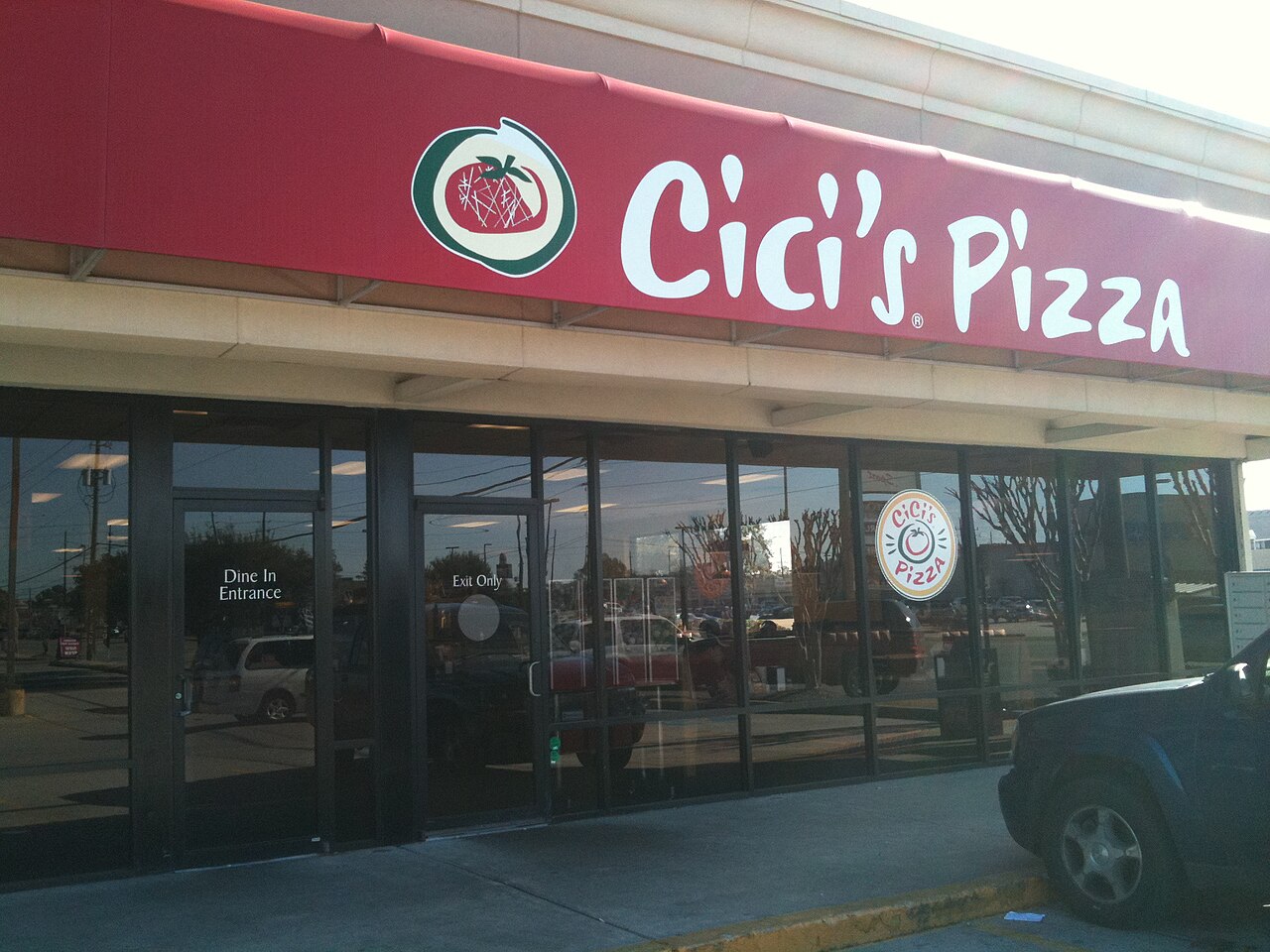
A Cicis franchisee with three pizza buffet restaurants in Florida and Alabama has filed for Chapter 11 bankruptcy. The filing is limited to Mulhern & Co., not Cicis corporate, but it is drawing attention because franchise health is a closely watched signal in the restaurant business.
What the filing says
Nation’s Restaurant News reported on November 23 that Mulhern & Co. filed for Chapter 11 bankruptcy in the U.S. Bankruptcy Court for the Northern District of Florida. Court records listed the debtor as Mulhern & Co., LLC, doing business as Cicis Pizza #207, with a filing date of November 20, 2026. Bankruptcy tracking records also show the case as a Chapter 11 Subchapter V filing in Pensacola.
According to Nation’s Restaurant News, the franchisee listed up to $50,000 in assets and $500,000 to $1 million in debts. The report said no reason for the filing was outlined in the petition. It also said no restaurant closures had been announced as of publication.
The restaurants tied to the franchise group are in Pensacola, Florida, and Daphne and Mobile, Alabama, according to Nation’s Restaurant News and Pizza Marketplace. Those city names matter for diners and landlords because no broader list of affected restaurants has been released beyond those three locations.
Cicis told Nation’s Restaurant News in an emailed statement that the filing is specific to one independently owned and operated franchise group and does not involve Cicis corporate or reflect the broader franchise system. The company said it remains focused on supporting franchisees and serving guests.
Why franchise watchers are paying attention
A single franchisee bankruptcy does not automatically point to a systemwide problem. Still, franchise analysts often watch these filings closely because they can show how operators are handling labor, rent, debt, and traffic pressures at the store level, especially in value-driven buffet formats.
This filing also lands against a longer backdrop for Cicis. Nation’s Restaurant News said Cicis Pizza’s parent company filed for Chapter 11 in early 2021. At that time, the chain owned 12 locations and franchised about 306 others, and the company cited pandemic-related losses.
The same report said Cicis peaked at 634 locations in 2008, according to Technomic, and ended 2025 with 267 locations. It also reported that system sales peaked at $822 million in 2008, then finished 2025 at $365.2 million. Nation’s Restaurant News added that the buffet model was hit hard during the pandemic because occupancy restrictions worked directly against self-serve dining.
For franchise watchers, that history gives the latest filing more context. The issue is not just one court case. It is how a legacy buffet pizza brand, and the operators inside its system, are managing a category that has faced uneven traffic and slower sales growth.
What it means for diners and the wider pizza category
For customers, the immediate takeaway is limited. No closures were announced in the initial report, and Cicis said the filing does not involve the corporate parent. That means the most practical question for guests in Pensacola, Daphne, and Mobile is whether normal operations continue during the court process.
For the broader industry, the timing stands out. Nation’s Restaurant News said pizza was the only restaurant category to post negative year over year sales in 2025. The same report also pointed to hundreds of closures at Pizza Hut and Papa Johns as part of system optimization efforts, along with recent bankruptcy filings involving franchisees from other pizza brands.
That does not make every pizza chain situation the same. A corporate bankruptcy, a franchisee restructuring, and a planned portfolio reduction are different events. Still, they are often read together because they show how hard it has been for some pizza operators to balance value pricing with rising operating costs.
For home cooks and restaurant regulars, the bigger lesson is how much the low-price buffet model depends on steady guest counts. When traffic softens, formats built around abundance and value can come under pressure faster than limited-menu concepts. That is one reason this otherwise narrow legal filing is getting noticed beyond those three restaurants.