
The snack aisle sells convenience, but not always nourishment. Strip away the flashy claims, and a few choices keep rising to the top. These are the snacks dietitians tend to trust because they do more than fill a gap between meals.
Plain yogurt, fruit, and nuts keep showing up for good reason
Ask dietitians what belongs in a realistic shopping cart, and plain yogurt is almost always in the conversation. The American Heart Association recommends plain fat-free or low-fat yogurt with fruit as a smart snack, while Cleveland Clinic dietitians continue to point to Greek yogurt as a practical option because it brings protein and staying power. That matters because snacks that combine protein with fiber tend to hold hunger better than foods built mostly around refined starch or sugar.
Fresh fruit earns the same kind of broad agreement. The Dietary Guidelines for Americans encourages choosing more whole fruits as snacks, and Harvard’s Nutrition Source lists chopped fresh fruit among nutrient-dense options that fit easily into everyday eating. In practice, fruit works best when it is treated as part of a snack, not the entire plan. Pairing berries, apples, or bananas with yogurt, cottage cheese, or nut butter usually makes the snack more satisfying.
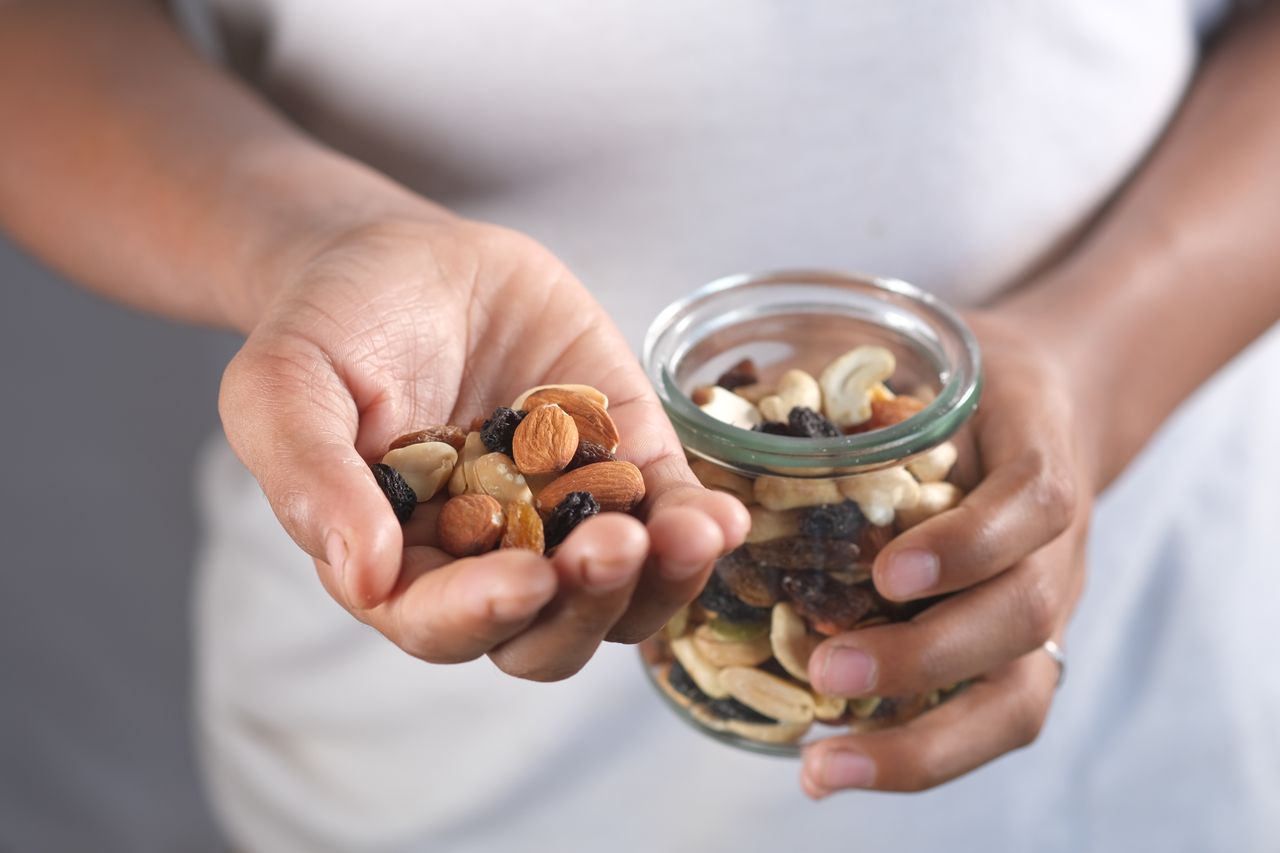
Nuts deserve their place, too, but with one caveat: portion size still matters. The American Heart Association highlights unsalted nuts and seeds as smart choices and notes that walnuts are especially rich in omega-3 fats. A small handful goes a long way, especially when the alternative is a large bag of chips that disappears without much fullness.
Hummus, roasted chickpeas, and popcorn solve the crunch problem
Many people do not want a sweet snack at all. They want crunch, salt, and something that feels substantial. This is where hummus, roasted chickpeas, and air-popped popcorn quietly outperform more processed options.
The American Heart Association specifically recommends pairing low-sodium hummus with raw vegetables such as carrots, cucumbers, broccoli, and peppers. MedlinePlus gives a similar example, suggesting 1 cup of raw vegetables with 2 tablespoons of hummus or bean dip. That combination works because it layers fiber, volume, and a modest amount of protein, which is far more useful nutritionally than a sleeve of crackers eaten on autopilot.
Roasted chickpeas land in the same camp. Harvard’s Nutrition Source includes roasted chickpeas among satisfying savory snack ideas, and dietitians often favor them because legumes bring both fiber and plant protein. They scratch the same itch as crunchy packaged snacks, but with a nutrient profile that actually supports fullness.
Then there is popcorn, one of the most underrated staples in the store. The American Heart Association lists air-popped popcorn as a healthy snack, and its serving guidance notes that 3 cups popped counts as a whole-grain serving. Cleveland Clinic dietitians still recommend air-popped popcorn in recent snack roundups because it offers volume and crunch without the heaviness of fried snack foods.
What dietitians really look for on the label
The smartest snack shoppers are not chasing buzzwords. They are checking whether a food offers protein, fiber, or healthy fat, and whether the label is loaded with sodium or added sugars. The FDA requires added sugars to appear on the Nutrition Facts label, which gives shoppers a simple way to compare flavored yogurts, granola bars, cereals, and trail mixes that often look healthier than they are.
That is why the most reliable snack picks are usually the least dramatic. Plain yogurt instead of dessert-style yogurt. Nut butter without extra sugar or tropical oils. Popcorn with simple ingredients. Hummus with a short ingredient list. According to the American Heart Association, packaged snacks are worth a second look at the Nutrition Facts panel, especially for sodium and added sugars.
A good rule is to build snacks the way dietitians build meals: combine produce with protein, or whole grains with healthy fat. An apple with peanut butter, vegetables with hummus, yogurt with berries, or popcorn with a handful of nuts all follow the same logic. These are not glamorous foods, but they keep earning shelf space because they are satisfying, flexible, and backed by the kind of nutrition advice that rarely changes with trends.