
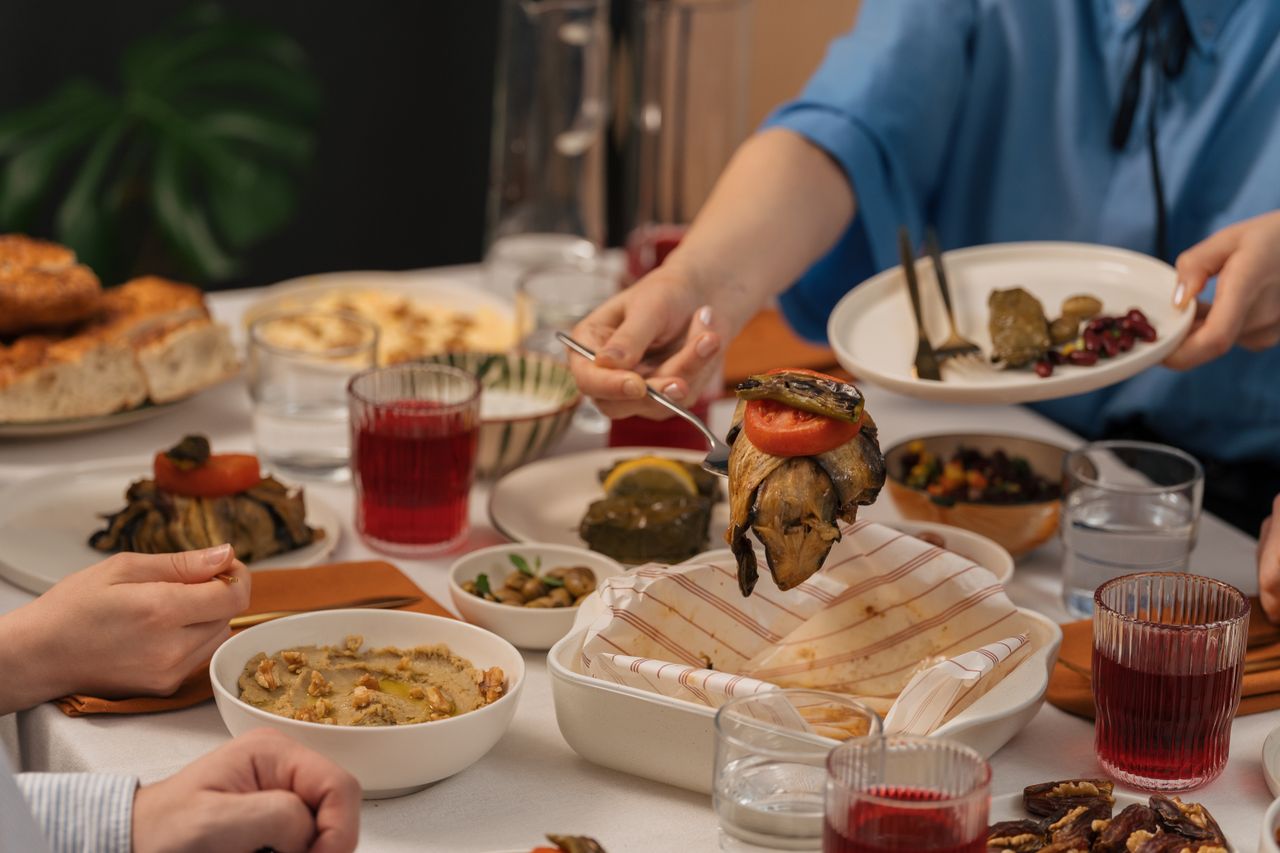
Stopping eating meat rarely ends a relationship with the food that helped define home. More often, it changes the way a dish is built, served, and talked about in the kitchen.
The recipe usually changes before the memory does
When people stop eating meat, the first loss is often not protein, it is recognition. A holiday stew, a pan of arroz con gandules cooked with pork, a pot of collards seasoned with ham hock, or a family dumpling filling can carry memory as much as flavor. Food writers and chefs have long described that tension, especially in communities where meat dishes signal celebration, grief, migration, or belonging.
Recent and archival reporting shows that many cooks respond by adapting, not abandoning. Bon Appétit has reported on vegan Puerto Rican and other diaspora cooks who rework dishes so they still read as culturally familiar at the table. The Guardian has similarly described vegan Filipino and Dominican cooks who keep traditional forms and seasonings even when the meat is removed. The common thread is that the dish may change, but the social job it performs often does not.
That helps explain why substitutions that mimic structure can matter more than exact imitation. A filling wrapped in banana leaves, a braise served over rice, or a richly seasoned noodle dish may still feel right because the technique, aroma, and occasion remain intact. The meat is important, but it is not always the only thing people are attached to.
Flavor, ritual, and identity tend to survive the switch
One of the clearest lessons from plant based cooks is that flavor memory often lives in seasonings, texture, and ritual. Washington Post food editor Joe Yonan wrote in 2025 that as a plant based cook, he has found the appeal of many traditional meat dishes is often tied less to the meat itself than to the flavorings around it. That observation lines up with the way many home kitchens actually cook, where garlic, chiles, onions, vinegar, herbs, smoke, and long simmering do as much identity work as the main protein.
That does not mean the change is emotionally simple. Bon Appétit has noted that food can function as an identity marker, and writers covering Black, Puerto Rican, Mexican American, and Filipino foodways have all described the pressure people feel when stepping away from ingredients that others treat as nonnegotiable. A meatless version of a family dish can be read by relatives either as care or as rupture.
In practice, many families land on compromise. Older coverage from The Washington Post documented households making parallel versions of the same dinner, or cooking a base dish and adding meat separately. That kind of split pot strategy keeps everyone at the table and lets a recipe evolve without demanding that one person surrender either conscience or inheritance.
The dishes that last are the ones people keep cooking
Over time, the dishes that raised you usually do one of three things. Some stay almost the same, with meat swapped for beans, tofu, mushrooms, jackfruit, lentils, or seitan. Some become occasional exceptions, saved for visits, holidays, or the homes of older relatives. Others fade, replaced by new signatures that still borrow the original dish’s spices, structure, or serving style.
What tends to endure is repetition. If a cook keeps making a meatless pozole, adobo, gravy, stuffing, or dumpling often enough, it stops feeling like a substitute and starts feeling like the family version. Food culture has always worked this way. As Bon Appétit argued this year in writing about how foods become American, dishes shift as communities move, adapt ingredients, and cook for new realities.
For home cooks, that is the useful takeaway. Stopping eating meat does not automatically erase the food that made you. It may ask you to decide what part of a dish is sacred, the ingredient, the method, the smell, or the people who gather for it. Once that answer is clear, the recipe can usually follow.