
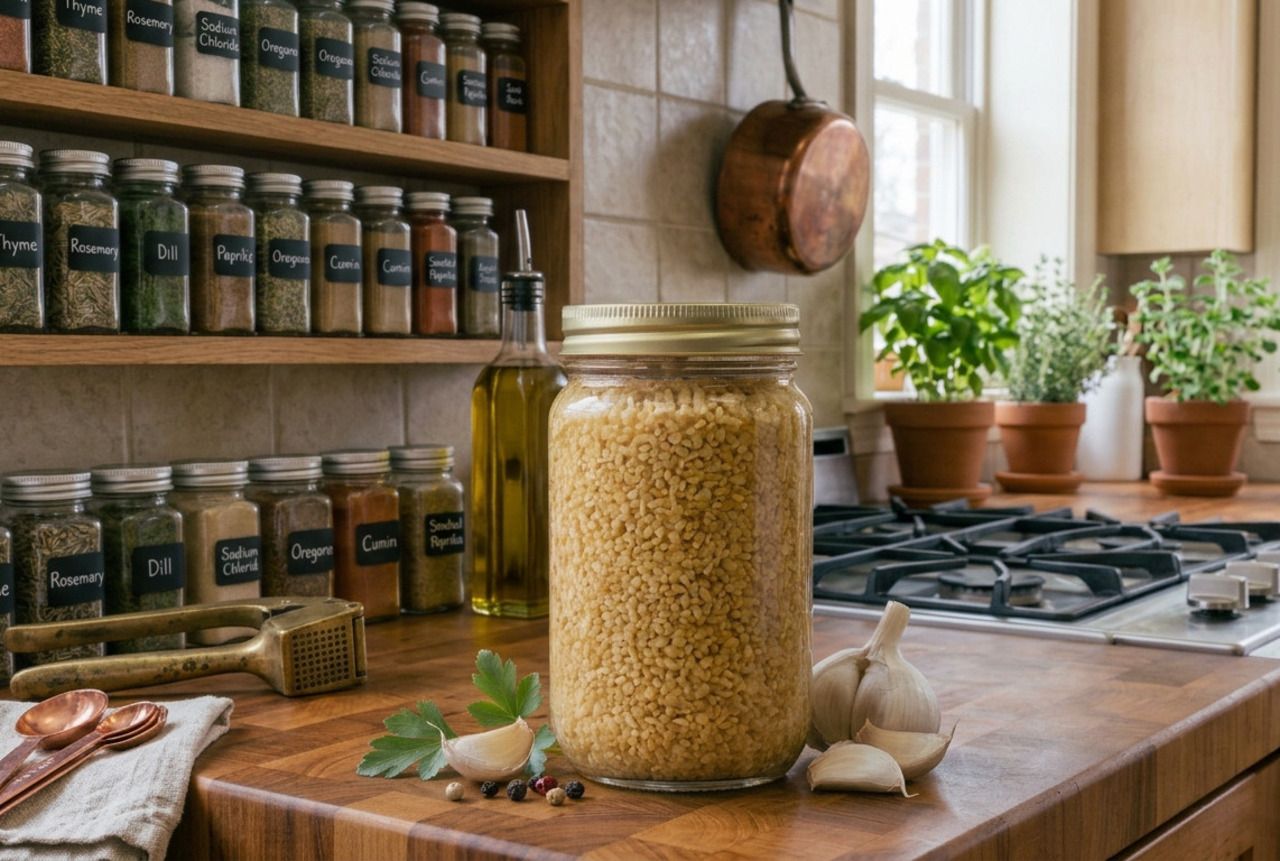
That squat little jar in the refrigerator inspires outsized opinions. For some cooks, it is a weeknight lifesaver; for others, it is a shortcut that flattens one of the kitchen’s most vivid flavors.
Why jarred garlic gets judged so harshly
Professional cooks tend to object to jarred garlic for one main reason: flavor. Bon Appétit has said plainly that pre-minced garlic is not the test kitchen’s first choice because it lacks the complex, distinctly garlicky character of fresh cloves, even if it is undeniably convenient. That criticism reflects basic food science, not just snobbery.
When garlic is cut or crushed, enzymes trigger the formation of allicin and other sulfur compounds that create the sharp aroma people associate with fresh garlic. University of California guidance notes that this flavor is strongest shortly after chopping because those compounds are unstable and break down quickly. By the time garlic has been minced, packed, acidified, and stored, the result is usually softer, flatter, and sometimes slightly sour.
That is why many chefs reserve jarred garlic for dishes where it blends into the background. A long-simmered soup, braise, marinara, or stew can absorb its milder profile without much penalty. In garlic bread, shrimp scampi, aioli, or any recipe where garlic is meant to announce itself, fresh cloves almost always win.
Even so, the anti-jarred consensus is not absolute. Some cooks argue that jarred garlic should be treated as its own ingredient rather than a failed imitation of fresh. That view has gained traction partly because convenience matters, especially on busy weeknights when peeling and mincing several cloves is the difference between cooking and ordering takeout.
The safety issue is real, but context matters
Jarred garlic’s reputation also gets tangled up with safety fears, especially around botulism. Here the most important distinction is between commercially produced garlic products and homemade garlic-in-oil mixtures. According to the USDA Food Safety and Inspection Service, garlic in oil stored at room temperature can support the growth of Clostridium botulinum and should be refrigerated at 40°F or lower for no more than 7 days if made fresh at home.
The FDA and university extension guidance explain why commercial products are different. Shelf-stable or refrigerated retail garlic products are typically formulated under strict controls, often with acidifying agents such as citric or phosphoric acid, to lower pH and prevent dangerous growth. University of California preservation guidance specifically notes that commercial garlic-in-oil products must be acidified for safety.
That distinction matters because consumers often lump all “garlic in a jar” together. A sealed, commercially prepared jar from a reputable brand is not the same as chopped fresh garlic covered in oil at home. USDA also advises consumers to reject swollen, leaking, or otherwise compromised containers and to follow label instructions once opened.
Recent recalls show why label compliance still matters. In early 2026, the FDA posted a recall involving peeled garlic sold by Tops because of a possible risk tied to Clostridium botulinum. That was not a condemnation of all prepared garlic, but it was a reminder that refrigeration, packaging integrity, and processing controls are not optional details.
So when does jarred garlic actually make sense?
The fairest verdict is that jarred garlic is useful, but limited. If your goal is speed, less waste, and easy portioning, it earns its place. Bon Appétit notes that pre-minced garlic can keep for around three months in the fridge, making it practical for households that cook with garlic often but not fast enough to use whole bulbs before they sprout or dry out.
It also makes sense in applications where garlic is one note among many. Think chili, meatballs, curry, bean dishes, pan sauces, or roasted vegetables with assertive seasoning. In those cases, the difference between fresh and jarred can shrink once heat, fat, salt, and long cooking times mellow everything in the pan.
But there is a reason chefs still reach for fresh cloves when flavor has nowhere to hide. Fresh garlic offers a cleaner aroma, more pungency, and more control over texture, whether sliced, smashed, grated, or finely minced. Even the cut matters: as The Washington Post recently noted, garlic’s intensity changes with how aggressively it is broken down.
In other words, that jar does not deserve blanket contempt, and it does not deserve blind trust either. Use it as a convenience ingredient, not a magic substitute. When safety directions are followed, commercial jarred garlic is generally a practical shortcut; when flavor is the point, chefs are right to keep arguing for the real thing.