
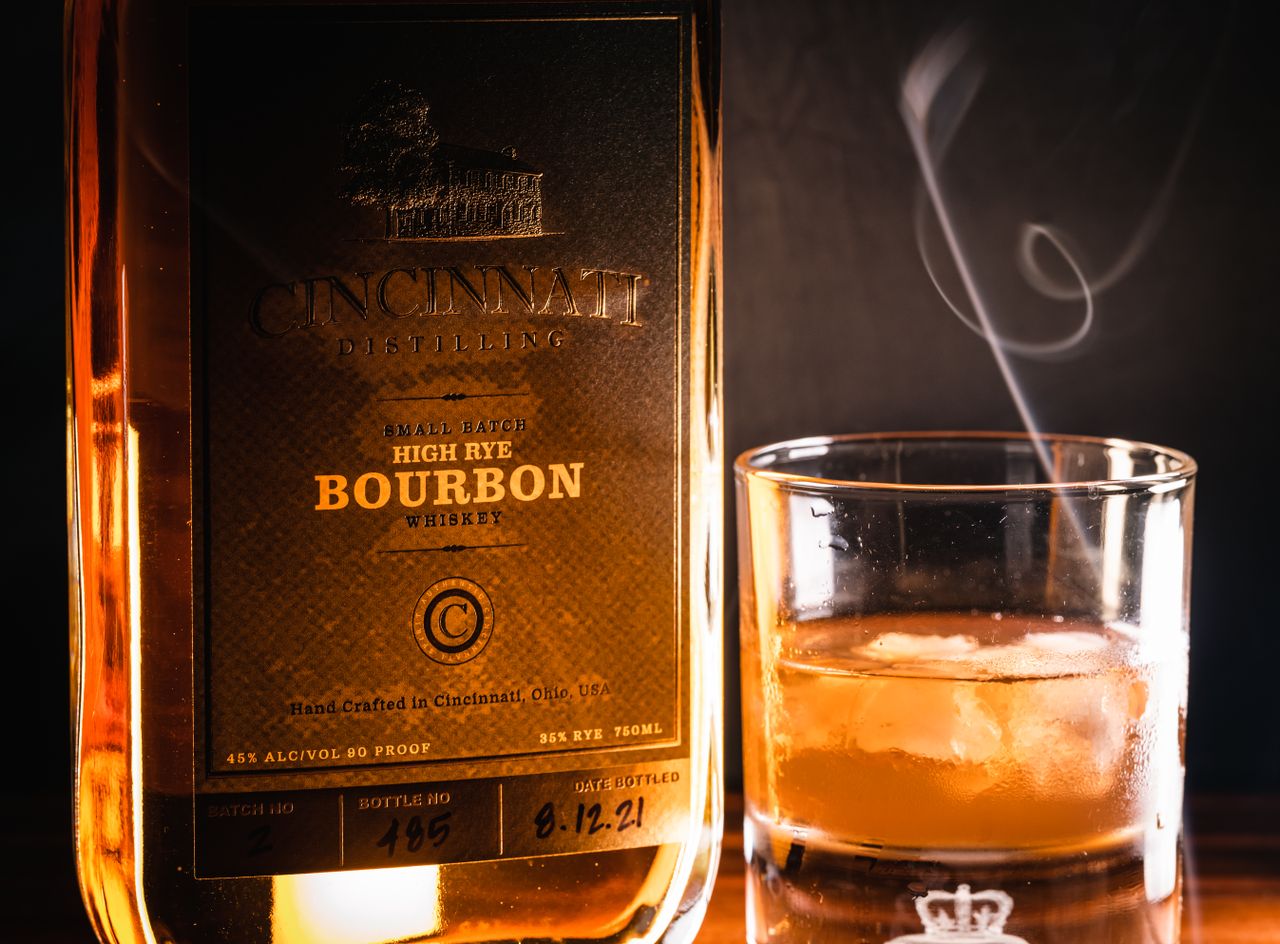
Bourbon and rye whiskey often get explained as a simple grain swap. That shorthand is partly true, but it leaves out one legal difference that matters if you want to understand what each label really means.
The 51% rule is real, but it is only the starting point
Under federal standards, bourbon whisky must be made from a fermented mash of at least 51% corn, while rye whisky must be made from a fermented mash of at least 51% rye, according to 27 CFR § 5.143. That is the core distinction most drinkers know, and it is the reason bourbon is commonly associated with sweeter, rounder flavors while rye is often linked with spicier or more herbal notes.
Those flavor descriptions are useful, but they are not guarantees. Mash bill is only one part of the finished whiskey’s character. Fermentation, distillation choices, barrel aging, warehouse conditions, and bottling proof all shape what ends up in the glass.
That is why a high-rye bourbon can come across as notably spicy, and a rye whisky made just over the 51% threshold can sometimes drink softer and sweeter than people expect. The law defines the grain minimum, not the final tasting notes.
The Kentucky Distillers’ Association uses the same basic mash bill explanation in its consumer FAQ, noting that bourbon must contain at least 51% corn and meet other production standards that help define the category.
The shared production rules are close, but not identical
Bourbon and rye whisky have a lot in common under federal law. Both must be distilled at no more than 160 proof, both must enter charred new oak barrels at no more than 125 proof, and both must be bottled at not less than 80 proof under the standards summarized in 27 CFR § 5.143 and the Kentucky Distillers’ Association FAQ.
Neither category has a general minimum aging period just to be called bourbon or rye whisky. That point gets missed a lot. A minimum aging requirement comes into play when the label says “straight.” Federal rules require straight bourbon whisky and straight rye whisky to be aged at least 2 years.
That means “bourbon” and “rye” are not automatic shortcuts for age. They are primarily standards about grain, proof, barrel type, and identity. A younger whiskey can still legally be bourbon or rye if it meets the rest of the category rules.
These parallel requirements are why the two categories are often described as nearly identical in production. Still, “nearly” is the important word, because one of the biggest differences is not about corn or rye at all.
The additive rule is the difference many drinkers miss
Federal standards prohibit added coloring, flavoring, and blending materials in bourbon, a restriction the Kentucky Distillers’ Association also highlights in its FAQ. That is one reason bourbon carries a particularly strict identity in the U.S. market.
Rye whisky is different. As the federal standards and related TTB regulations make clear, certain harmless coloring, flavoring, and blending materials may be permitted in some rye whisky products, depending on how they are classified and labeled. That is the nuance many quick bourbon-versus-rye explainers skip.
So the cleanest way to compare the two is this: bourbon and rye whisky share similar rules on grain minimums, distillation proof, barrel entry proof, and barrel type, but bourbon also faces a stricter no-additives rule. That does not tell you which bottle will taste better. It does tell you the categories are not legally interchangeable.
For drinkers, the practical takeaway is simple. Use the mash bill to understand the broad style, but read the label closely if you want the full picture. The grain starts the story, and the production standard finishes it.