
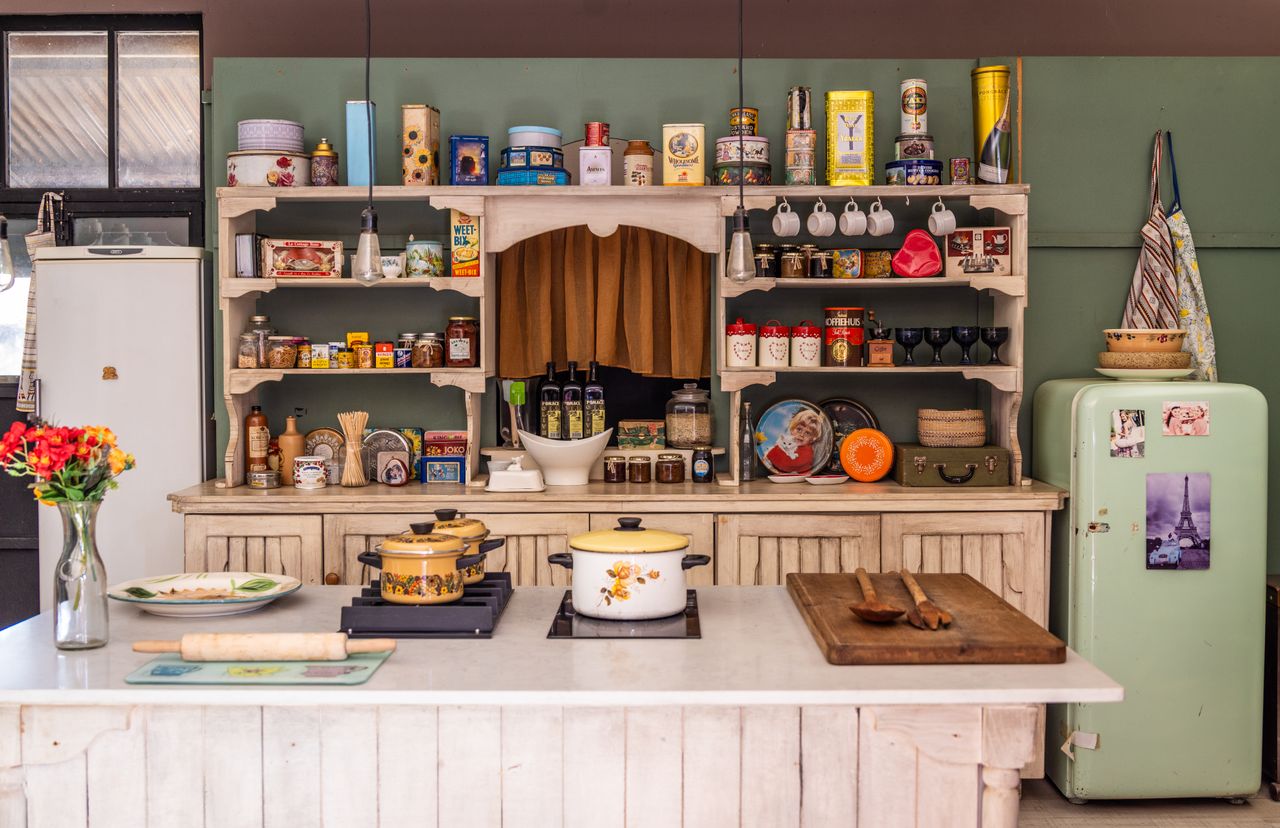
A 1950s pantry could speak before a hostess ever did. Its shelves revealed not only what a family ate, but how they wanted to be seen.
In postwar America, convenience, abundance, and domestic polish all had packaging. What sat behind the kitchen door often signaled class, modernity, thrift, and even a family’s faith in the future.
Branded cans and boxed staples became household shorthand
In the 1950s, the pantry shifted from a mostly practical storage space into a display of postwar consumer confidence. As supermarkets expanded and packaged foods became more widely available, the presence of recognizable national brands began to suggest reliability and upward mobility. Progressive Grocer has noted that supermarkets’ share of food-sector sales rose from 35% in 1950 to 70% by 1960, a major change that gave branded pantry goods a much larger role in everyday life.
Few products carried that symbolism more clearly than canned soup. Campbell’s condensed soups had already become a staple by midcentury, and the company’s own historical materials and Smithsonian records show how thoroughly the red-and-white can had embedded itself in American kitchens. A well-stocked shelf of tomato, chicken noodle, or cream soups suggested a household that valued both order and convenience, especially in an era when speed in meal preparation was increasingly marketed as a domestic virtue.
Boxed cake mixes, crackers, instant puddings, and other shelf-stable goods conveyed something similar. According to the National Women’s History Museum, grocery bills climbed as many women embraced processed and convenience foods that promised relief from labor-intensive home cooking. These products did not simply save time; they advertised participation in a new middle-class ideal, one built around efficiency, modern appliances, and polished entertaining.
Home-canned jars still signaled thrift, skill, and self-reliance
Even as branded goods multiplied, home-preserved foods remained powerful markers of household identity. In many homes, especially outside dense urban areas, jars of peaches, tomatoes, beans, jams, and pickles still represented competence and foresight. USDA survey data from food preserved in 1954 found that U.S. housekeeping families canned and froze an average of 160 pounds of food for home use, with more than half of that amount preserved by canning. Tomatoes and peaches were among the foods most often canned, while jams, jellies, and preserves remained common forms of fruit preservation.
The same USDA material shows how sharply these habits varied by household type. Farm families preserved an average of 636 pounds of food, compared with 57 pounds for urban families, making pantry shelves an especially visible measure of geography and self-sufficiency. In that context, rows of labeled jars did more than store calories for winter. They projected discipline, gardening know-how, and a refusal to waste abundance.
There was also a subtle status divide inside the idea of thrift itself. A family that canned successfully demonstrated labor and skill, but a family that no longer had to rely on large-scale home preservation could signal prosperity through store-bought convenience. The Forest Service’s historical overview of preservation notes that by the 1950s the old pantry was increasingly giving way to the home chest freezer, underscoring how preservation methods themselves were becoming signs of changing means and modern technology.
Gelatin mixes and frozen dinners advertised modern domestic ambition
No midcentury pantry item better captured aspiration than Jell-O. Virginia Tech’s archival history describes the 1950s as the peak era of the Jell-O salad, and food historians have documented how the brand even introduced savory flavors to meet demand for molded salads served at luncheons, potlucks, and holiday tables. A box of gelatin was cheap, but what it promised was elegance: color, novelty, refrigeration, and enough leisure to unmold something theatrical.
Then came the frozen frontier. Smithsonian and History both trace the TV dinner boom to the early 1950s, with Swanson’s famous frozen meal taking off after 1953 and selling in huge numbers by 1954. Stocking frozen prepared meals suggested that a household had not only cash for convenience foods but also dependable freezer space, which was itself not universal. USDA data indicate that only about one-fifth of households had freezing facilities in 1954, making frozen foods a practical luxury as much as a culinary novelty.
Taken together, these pantry finds formed a quiet social language. Home-canned fruit hinted at labor and land, branded soup at dependable middle-class order, Jell-O at polished sociability, and frozen dinners at a household plugged into the newest rhythms of suburban life. In 1950s America, the pantry was not just where food waited. It was where identity sat on the shelf.