
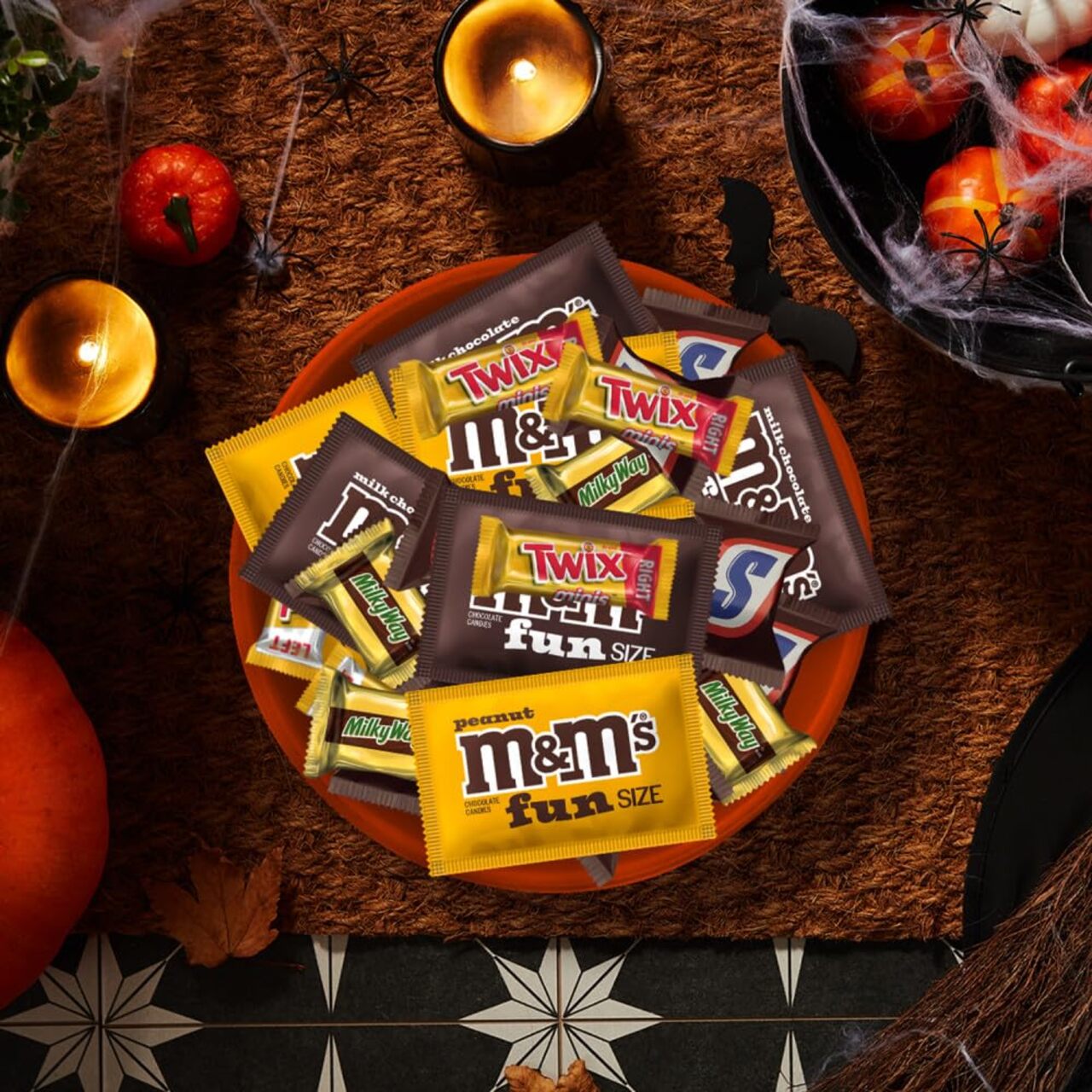
Halloween candy debates usually end in stalemate. This year, the numbers tell a sharper story.
One candy managed to dominate across the broader market, but millennials broke from the pack in a way that says a lot about how Americans actually snack.
M&M’s still owns Halloween at the register
If the question is which candy truly “won” Halloween in 2026, M&M’s has the strongest case. CandyStore.com’s updated national sales map, built from 18 years of Halloween-season data and distributor information, ranks M&M’s as the most popular Halloween candy in America for 2026. It held onto the top overall sales spot and tied Sour Patch Kids for the most states won, with 10 each. That matters because Halloween is less about niche fandom than repeat, mass purchase behavior.
M&M’s also benefits from the kind of versatility retailers love. It fits mixed candy bowls, office treat stations, school events, and party packs without requiring a strong brand preference from the person handing it out. In practical terms, that makes it the safest all-ages buy. A household may argue over peanut butter cups, candy corn, or sour candy, but very few people reject a handful of M&M’s.
That market strength lines up with broader Halloween spending patterns. The National Confectioners Association said in September 2026 that 81% of Americans planned to celebrate Halloween, while 85% said they would share treats with trick-or-treaters. The same survey noted that more than one-quarter of shoppers buy Halloween treats before October even begins, reinforcing how early and how broadly candy purchasing now happens. In a season driven by convenience and scale, M&M’s remains the cleanest consensus pick.
Why one brand can win sales and still lose the popularity vote
Sales leadership, however, is not the same thing as emotional preference. CandyStore.com’s 2026 best-Halloween-candy survey found that Snickers, not M&M’s, finished No. 1 among candies people said they liked best. M&M’s came in fourth, even while staying first in national sales. That split is one of the most revealing details in the Halloween candy business: people often buy one candy in bulk and personally crave another.
The reasons are intuitive. M&M’s is highly shareable, portion-friendly, and easy to distribute. Snickers is richer, messier, and more indulgent, which makes it feel more like a personal reward than a bowl filler. In other words, M&M’s wins because it is universally acceptable; Snickers wins because it feels like a treat people actively want to keep for themselves.
CandyStore.com even highlighted that contradiction directly, noting that people say Snickers is the best, then go buy M&M’s and Sour Patch Kids. That pattern mirrors a larger retail truth: checkout behavior often reflects budget, convenience, and group appeal, while survey responses reveal identity and nostalgia. Halloween candy is one of the clearest examples of that split because shoppers are often buying for others while mentally ranking for themselves.
Millennials are the generation that veers off script
That is where millennials become especially interesting. The broad market story favors M&M’s as the dependable cross-generational winner, but millennials are more likely to elevate Snickers-style satisfaction over neutral crowd-pleasing appeal. It fits a generation that came of age during the rise of personality-driven snacking, brand nostalgia, and the idea that even familiar treats should feel a little more specific, a little more premium, and a little more worth stealing from the kids’ haul.
Industry data supports the idea that millennials occupy a distinct Halloween role. The National Confectioners Association has previously noted that millennials are especially active in family-centered Halloween traditions, often as the adults walking neighborhoods with their own children. That puts them in a dual role: bulk buyer for the bowl, selective curator for personal favorites. M&M’s makes sense for the first job. Snickers makes sense for the second.
So the cleanest conclusion is this: M&M’s won Halloween where it counts most in volume, reach, and broad acceptability. But millennials went a different way, favoring the candy bar that feels more like an earned indulgence than a default purchase. In the annual battle between what America buys and what it secretly loves, M&M’s took the season, and Snickers took the millennial vote.