
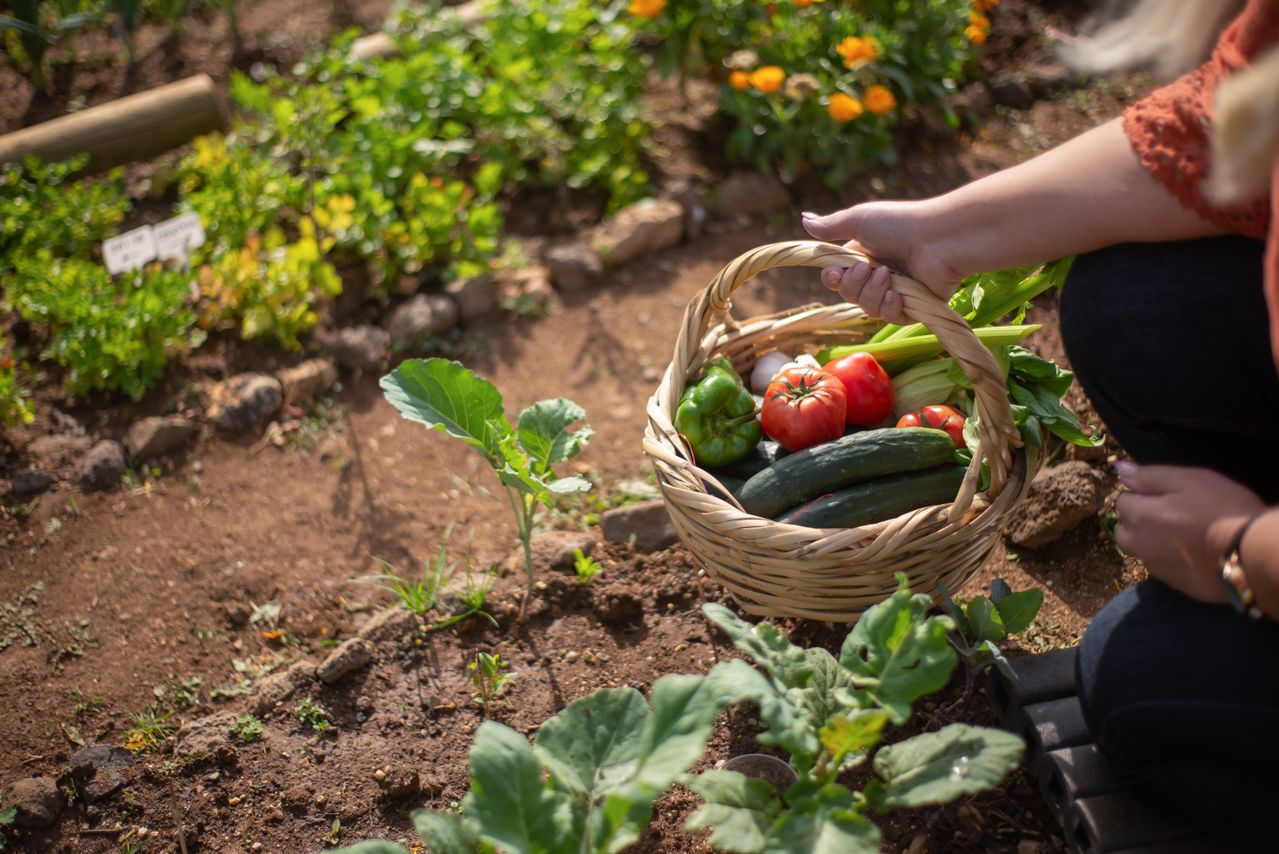
A backyard garden will not erase your grocery bill overnight. But it can take a surprising bite out of the produce aisle if you grow the crops that are expensive, perishable, and productive at home.
That matters more when food-at-home prices keep rising and fresh produce remains one of the easiest parts of the grocery cart to replace with a harvest picked minutes before dinner.
Why a Backyard Garden Can Offset Real Grocery Costs
USDA’s Economic Research Service reported that food-at-home prices increased in 2025, continuing the broader long-term rise in grocery costs. That is exactly why backyard food production works best when it targets items families buy often and use quickly, especially salad greens, herbs, tomatoes, cucumbers, and peppers. These are products with strong retail value, short shelf life, and a noticeable quality jump when harvested at home.
University extension guidance consistently points to lettuce, tomatoes, cucumbers, peppers, and zucchini as high-value home garden crops because they produce heavily in limited space. Florida’s home-gardening estimates, using 2025 USDA retail prices, show meaningful harvest potential per small planting, with cucumbers, lettuce, peppers, and tomatoes all offering solid returns for modest garden space. UConn Extension makes the same economic point with lettuce: the cost of a few plants can compare favorably with a single store-bought head.
The most practical replacements for a grocery run are 10 familiar crops: leaf lettuce, spinach or other cut greens, tomatoes, cucumbers, zucchini, bell or hot peppers, green beans, basil, parsley or chives, and strawberries. This group covers salads, side dishes, sauces, snacks, and garnishes, which means the harvest fits directly into everyday meals instead of becoming a novelty.
The 10 Crops That Pull Their Weight at Home
Leaf lettuce and cut-and-come-again greens may be the fastest win. Many salad crops mature in roughly 30 to 45 days, and growers can harvest outer leaves repeatedly instead of pulling the whole plant. That turns a small bed or container into a rolling replacement for boxed greens, one of the most expensive and fragile purchases in the store.
Tomatoes, cucumbers, and zucchini are the classic summer workhorses. University of Minnesota crop planning figures show cucumbers and zucchini can be highly productive per plant, while tomatoes remain one of the most rewarding space-to-value crops for home gardeners. A couple of healthy tomato plants, one or two cucumber vines, and a zucchini plant can flood a kitchen with ingredients for salads, sandwiches, roasting, and pasta nights.
Peppers and green beans extend that value. Peppers are slow to start but produce over a long window in warm weather, while bush beans offer a compact crop that can replace multiple grocery purchases in a short stretch. Herbs deserve special attention too: Maryland Extension notes that basil, parsley, cilantro, chives, rosemary, thyme, oregano, and mint all do well in containers, and regular cutting promotes more growth. When herbs are sold in tiny supermarket packs yet spoil in days, growing your own is one of the easiest financial wins.
What Makes These Crops Worth Growing
The economics improve when the crop is either highly perishable or harvested repeatedly. Lettuce, spinach, basil, parsley, and chives fit that model perfectly because you can snip what you need and leave the plant producing. That reduces waste at home and eliminates the common problem of buying a full retail pack when dinner only needs a handful.
Strawberries are another standout, especially for small spaces. Penn State Extension calls strawberries an ideal fruit crop for limited-space gardeners, and day-neutral types can produce through much of summer. They are delicate, expensive, and noticeably better fresh, making them one of the clearest examples of a backyard crop replacing a premium grocery item.
The limit, of course, is that a garden replaces parts of the grocery run, not the entire cart. A smart strategy is to focus on the items your household buys every week: salad greens, herbs, tomatoes, berries, cucumbers, beans, peppers, and summer squash. When those come from the yard instead of the store, the savings are real, the quality is better, and dinner starts tasting less like a purchase and more like a harvest.