
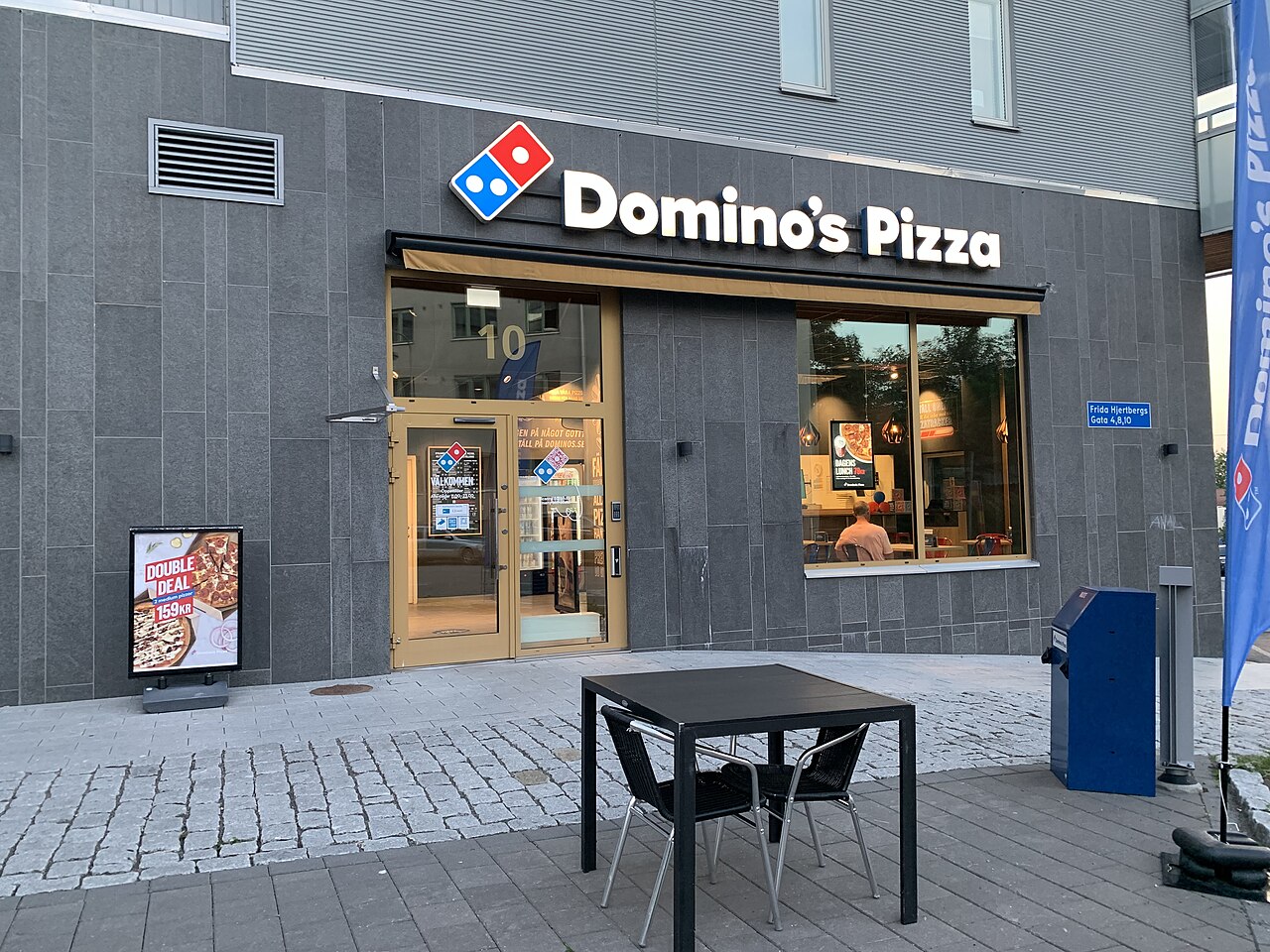
Pizza chains have been adjusting store portfolios as operators face uneven traffic, higher costs, and tighter franchise economics. In Ohio, that pressure surfaced abruptly when a Domino’s franchisee exited 13 locations in multiple north-central communities. Domino’s said the issue was limited to one franchisee and not representative of the broader brand.
Domino’s confirmed 13 Ohio store closures tied to a former franchisee
Domino’s confirmed on September 14 that 13 Ohio locations operated by Mile High Pizza Company had closed, according to a company statement reported by Nation’s Restaurant News and Restaurant Dive. The stores were tied to franchisee Anthony Satterwhite, whom Domino’s described as a “former franchisee.” The company also said it is working to transition the restaurants to new ownership so service can eventually resume in affected markets.
The closure count is notable because broad shutdowns of this size are uncommon inside the Domino’s U.S. system. Restaurant Dive reported that Domino’s recorded only nine franchise terminations in 2025 across its nearly 7,000 franchised U.S. stores. That makes the Ohio closures significant even as Domino’s continues to post overall domestic unit growth.
Publicly available records also show the scale of Satterwhite’s prior footprint. Nation’s Restaurant News reported that Domino’s most recent franchise disclosure document, published in April 2026, showed Satterwhite owned at least 25 locations at the end of 2025. Mansfield News Journal, as cited in coverage of the closures, reported that he had been a Domino’s franchisee since 2017.
The shutdowns hit several north-central and northeast Ohio communities
The confirmed Ohio cities named in published reports include Mansfield, Canal Fulton, Ashland, Galion, Crestline, Akron, Barberton, Mount Gilead, and Wadsworth, according to Nation’s Restaurant News and local reporting echoed by AOL. That establishes the closures as a multi-market disruption rather than a single-city retrenchment. Some of the affected communities are in Richland, Stark, Summit, Morrow, Medina, and Crawford county trade areas.
Local reports have identified at least some specific storefronts, including a Domino’s at 2077 Locust St. in Canal Fulton and locations in Mansfield and Mount Gilead, according to AOL’s republication of local reporting. Even so, the company has not released a comprehensive public list of all 13 affected Ohio restaurants. That means some city-level and address-level details remain unconfirmed by Domino’s itself.
For customers, the immediate impact is straightforward: some neighborhoods temporarily lost nearby carryout and delivery coverage. Domino’s has not publicly said when any of the closed Ohio stores might reopen under new operators. The company’s statement instead focused on finding replacement ownership so customers in those communities can again access the service and products they expect from the brand.
The closures come as Domino’s grows overall but franchise pressures persist
Domino’s framed the episode as an isolated franchisee matter, but the broader pizza business has been contending with softer category demand and operator cost pressure. Nation’s Restaurant News, citing Technomic data, reported that the pizza category declined 0.3% year over year in 2025 even as Domino’s posted a 4.8% gain. The same report noted that Pizza Hut and Papa Johns have also been closing hundreds of locations this year while responding to slower sales.
At the corporate level, Domino’s is still expanding. The company’s second-quarter 2026 financial results showed 26 net new U.S. store openings in the quarter, after 19 net new domestic openings in the first quarter, and management said it was targeting about 175 net new U.S. stores for the full year. That contrast underscores that systemwide growth can continue even while individual franchisees run into local financial or operating trouble.
What Ohio residents should expect next is a transition period rather than an immediate brand exit. Domino’s said it is actively working to place the affected stores under new ownership, but it has not released a timetable for each market. Until that process is complete, customers in the affected Ohio cities may see reduced delivery ranges, fewer nearby carryout options, or both, while the brand attempts to restore service store by store.