
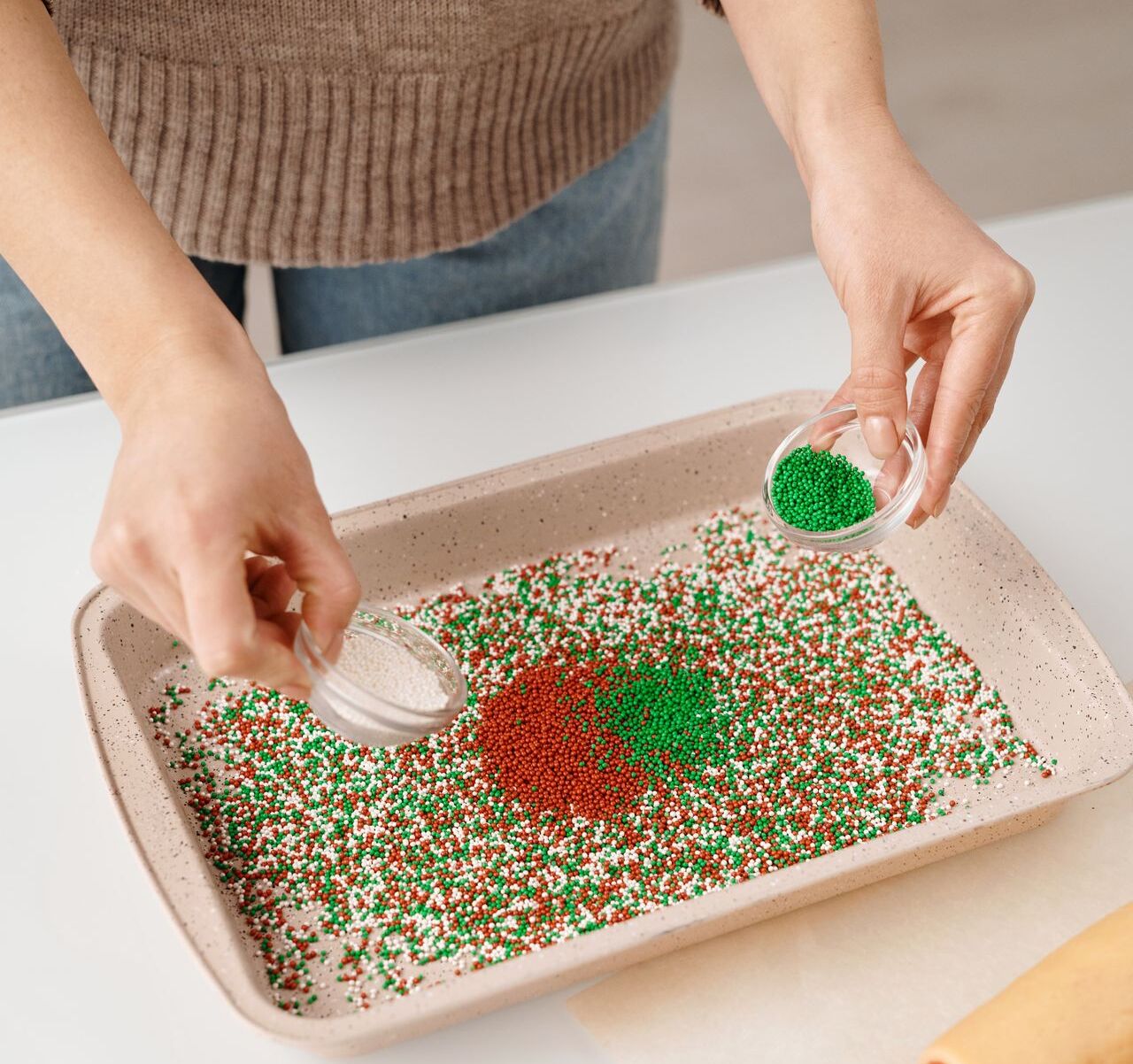
Across the food business, social-media aesthetics continue to shape what bakeries make, how products are photographed, and which desserts gain traction first. In recent months, that pressure has narrowed onto a very specific visual: sprinkle patterns that look stitched, embroidered, or carefully placed by hand onto cakes and food-adjacent craft items. The result is a fast-moving trend with visible momentum, but no single verified explanation for why it arrived all at once.
A highly specific sprinkle look is moving from cakes to craft-style food design
The most concrete sign of the trend is its appearance across multiple published outlets and creator communities within a short period. AOL published a food-decorating piece on September 12, 2026 describing an “embroidery” effect made with sprinkles, while ABC News, Delish, Vogue, and USA Today all documented the wider dot-cake and sprinkle-surface craze earlier this summer. Those reports confirmed that bakers, national brands, and home creators were all producing desserts defined by dense sprinkle placement, precise decoration, and texture-led presentation.
That spread is not limited to one format. Vogue reported that brands including Fage, Shake Shack, and Carbone had created their own spin on the dot-cake concept, indicating the style had moved beyond independent bakery experimentation and into larger consumer-facing food marketing. The Philadelphia Inquirer separately reported that bakeries in the region began receiving custom requests in late May, with operators saying they already had the ingredients needed to execute the look.
The stitched version appears to be an extension of that same visual logic. Rather than treating sprinkles as a finishing garnish, creators are placing them in deliberate lines, shapes, and filled-in designs that resemble embroidery or beadwork. Public discussion threads on Reddit also show makers asking for methods to “sew” sprinkles onto crochet or textile dessert projects, suggesting the look has crossed from edible presentation into food-themed crafts, although those posts do not establish the trend’s origin.
The impact is clearest in bakery cases, social feeds, and food-themed merchandise
For local readers, the effect is showing up less as a single recall-style event or chain action and more as a visible shift in what bakeries and creators are making. Published reporting from Philadelphia and Boston documented bakeries responding to direct customer demand for sprinkle-heavy cakes, and Parade reported that Publix introduced a bakery product tied to the dot-cake aesthetic. That confirms the style is affecting both independent operators and mainstream grocery bakery programs.
What is not yet known is the full geographic footprint of the stitched-sprinkle variant specifically. No national trade group or major bakery chain has released a comprehensive list of locations offering embroidery-style sprinkle cakes, and there is no central dataset showing how many shops have added them. In that sense, the trend is verified through multiple examples, but not yet through a single industry count.
The merchandise side is also relevant. The Washington Post reported in late August that food brands are continuing to pursue fashion and lifestyle collaborations aimed at Gen Z, reinforcing the idea that food visuals now travel easily into apparel, accessories, and decor. That broader crossover helps explain why a sprinkle motif might appear stitched onto non-edible items at the same time it is trending in bakery content.
Social-media texture, low production barriers, and nostalgia are the strongest documented explanations
The most evidence-backed explanation is not mystery so much as convergence. Multiple outlets tied the popularity of these desserts to visual texture, nostalgia, and strong performance on short-form video. The Boston Globe reported that bakers are seeing consumer interest in foods that show texture clearly on camera, while Delish and ABC News both described the appeal of the thick frosting-and-sprinkle finish as central to the trend’s online spread.
There is also a practical reason bakeries can move quickly. The Philadelphia Inquirer reported that one bakery did not need new ingredients or equipment to make dot cakes, because cake, frosting, and nonpareil sprinkles were already on hand. That lowers the barrier for adoption: operators can respond to viral demand without reworking production systems or investing in new inventory.
For customers, that means the stitched-sprinkle look is likely to keep appearing in limited bakery runs, custom orders, and food-themed craft goods so long as it remains effective online. What remains unconfirmed is a single origin point or a definitive reason this exact presentation broke through in 2026 instead of earlier. The documented facts point instead to a familiar pattern in food media: a simple, low-cost format, amplified by video, adopted quickly because it is easy to reproduce and easy to recognize.