
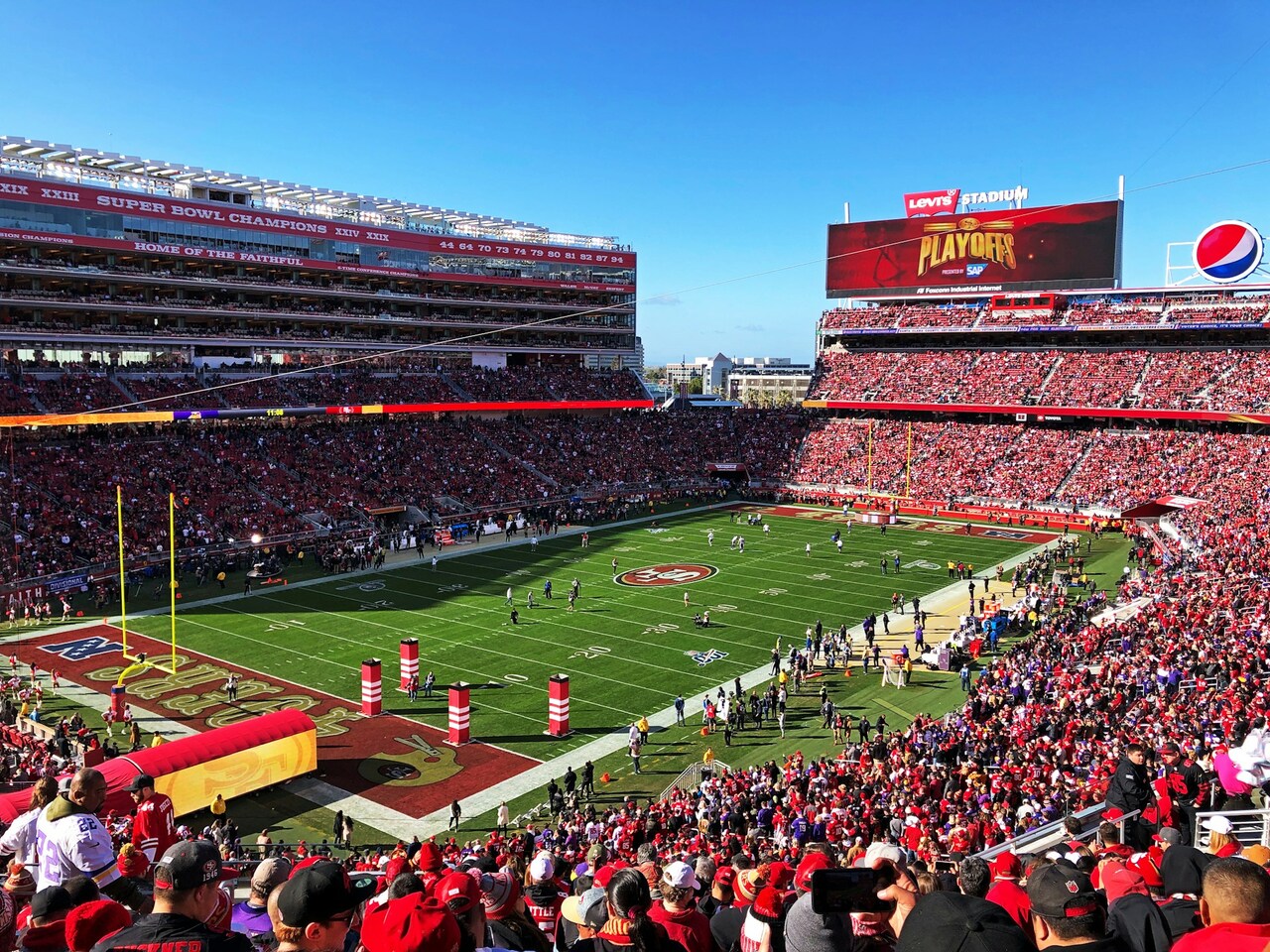
As sports venues and food operators face growing pressure to cut waste and source more ingredients locally, stadium sustainability projects have become a bigger part of the live-events business. At Levi’s Stadium in Santa Clara, the San Francisco 49ers’ rooftop Faithful Farm has turned that broader trend into a working food-production site, with produce now helping feed fans at NFL games and supporting donations in the Bay Area. What began as a project tied to food access and community education has become one of the most visible examples of an urban farm integrated directly into a major U.S. stadium.
Levi’s Stadium put a working farm on its roof
Levi’s Stadium officially unveiled the Faithful Farm on September 14, 2016, saying the project brought the first rooftop farm to a professional sports venue, according to the stadium’s announcement. The farm was developed with California urban-farming company Farmscape and was described at launch as a way to create local jobs, educate the community and grow vegetables and herbs for use at the venue. The stadium said the installation was designed as a working agricultural space, not a symbolic garden.
The scale has grown into a meaningful part of stadium food operations. In the San Francisco 49ers’ 2025 media guide, the team said the 7,500-square-foot rooftop farm supports more than 40 organic rotational crops, including tomatoes, squash, peppers and eggplants. The same team document said the annual yield exceeds 10,000 pounds and that all of the harvest is used in dishes served at Levi’s Stadium, with excess produce contributing to humanitarian efforts through food banks and nonprofits across the Bay Area.
That output is why the project now reaches far beyond a single premium amenity or sustainability display. A farm producing more than 10,000 pounds a year can feed large event crowds over time while also sending surplus into community distribution channels. The 49ers have not published a game-by-game breakdown showing exactly how many menu items use Faithful Farm produce or how much is donated each season, but the team has confirmed both uses publicly.
The local impact is centered in Santa Clara and the Bay Area
The confirmed geography is narrow and specific: the farm sits on the roof of Levi’s Stadium in Santa Clara, and the produce is used at the 49ers’ home venue and directed to Bay Area nonprofits when there is excess harvest, according to the 49ers’ media guide. That makes the local impact distinct from national stadium-sourcing programs that rely on distant distributors. In this case, food is being grown and consumed, or redistributed, within the same regional economy.
The food-access mission is also part of the project’s original framing. When Levi’s Stadium announced the farm in 2016, the venue said the project would provide community education on growing food close to home while also producing ingredients for stadium kitchens. That message aligned with a broader Bay Area conversation around food access, neighborhood-level production and reducing the distance between farms and consumers.
What is not publicly clear is the exact share of the harvest that goes to concessions versus community partners in any given year. The 49ers have said excess produce supports food banks and nonprofits, but they have not released a comprehensive annual breakdown naming every recipient organization or listing pound-by-pound allocations. Even so, the team has consistently described the farm as part of both its food-service system and its community-support efforts in the region.
The project reflects broader pressures on stadium food and food access
The reason this kind of project exists is tied to multiple documented trends. Stadium operators have spent the past decade looking for ways to reduce food miles, improve sustainability credentials and differentiate their food programs, according to Levi’s Stadium materials and industry coverage of the venue. Levi’s Stadium has repeatedly highlighted local sourcing in its food operation, and an NRDC report previously said 85 percent of ingredients and products used there were sourced within California, with 70 percent of food suppliers located within 150 miles of Santa Clara.
The food-desert connection comes from the wider urban-agriculture movement that treats local growing as both an access issue and an economic-development tool. At the Faithful Farm’s unveiling, Levi’s Stadium said the space would educate residents about what can be grown close to where people live while creating jobs and supplying fresh food. Farmscape and later business coverage have continued to present the site as a model for producing food inside dense developed environments rather than relying entirely on traditional farmland.
For customers and residents, the practical takeaway is straightforward. Fans at Levi’s Stadium can expect some produce used in stadium dishes to come from the venue’s own roof, while surplus harvest continues to support Bay Area food banks and nonprofit partners, according to the 49ers. As Levi’s Stadium keeps hosting large-scale events beyond NFL games, including its recent run of major international matches, the farm remains a fixed part of how the venue links food service, sustainability and local community support.