
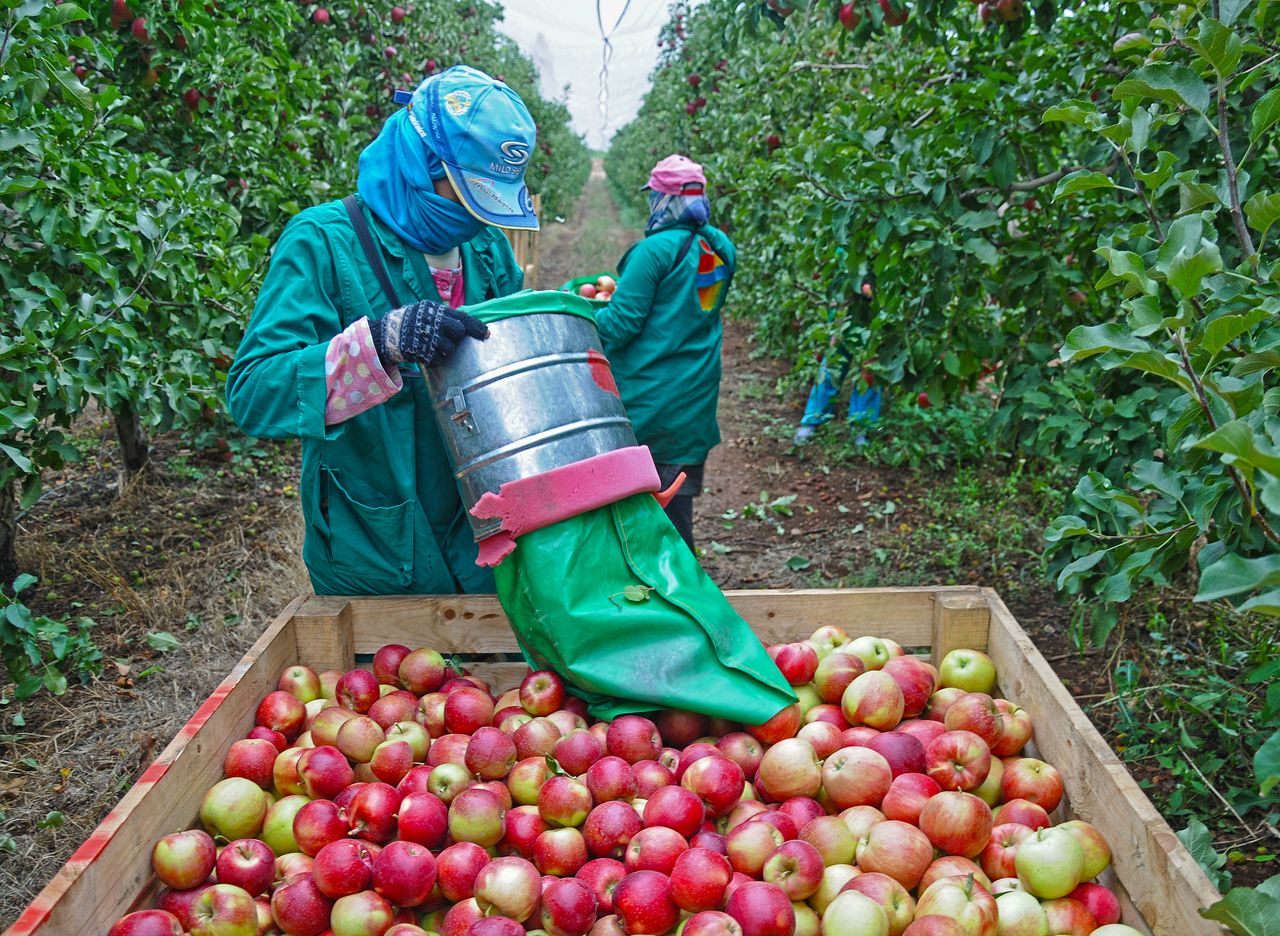
Apple harvesting is entering a new phase as growers face labor pressure, tighter efficiency demands, and rising expectations around fruit quality across the U.S. supply chain. In Washington state, where the country’s largest apple industry is concentrated, a field trial involving Superfresh Growers and Moses Lake-based Automated Ag is drawing attention to a vacuum-assisted system called the Bandit Cyclone. The demonstration, detailed in Food Safety News on August 24, 2026, points to a possible shift away from the ladder-and-picking-bag method that has defined orchard work for generations.
Washington trial puts Bandit Cyclone in the spotlight
The specific development centers on the Bandit Cyclone, a vacuum-based harvest-aid system developed by Automated Ag and recently showcased in partnership with Superfresh Growers in Yakima, Washington, according to Food Safety News. The system uses a moving platform with four large suction hoses, allowing workers to pick apples from the tree and place them directly into the hoses instead of carrying heavy bags up and down ladders. Automated Ag owner J J Dagorret told the publication the apples move through the hoses at about 15 feet per second for roughly half a second before reaching a padded decelerator and then a bin.
The scale claims tied to the system are significant. Food Safety News reported that the platform has been about 35 percent more efficient than standard handpicking and has cut bruising by half in trial use. Dagorret also said a crew of four pickers can fill large orchard bins in about 10 to 15 minutes, a figure that points to why growers are paying attention during peak harvest.
The company has not announced a broad commercial rollout date, and the technology remains in the trial stage. Still, the public demonstration marked one of the clearest signs yet that orchard mechanization is moving beyond platforms and pruning aids into the harvest process itself.
Why this matters first in Washington orchards
Washington is the clearest place to watch this shift because it remains the dominant apple-producing state in the country. USDA data and industry materials cited by Washington apple groups show the state accounts for roughly 60 percent or more of U.S. apple production, giving any operational change there outsized importance for growers, packers, and retailers nationwide. That scale helps explain why a harvest-aid trial in Yakima has broader significance than a typical equipment test.
What is confirmed is that the current demonstration involves Washington companies and Washington orchards, specifically Superfresh Growers in Yakima and Automated Ag in Moses Lake. What is not yet known is how many orchards will adopt the Bandit Cyclone after trials conclude, how many units may be deployed for the 2026 harvest, or which additional growers in the state may be lined up to test the equipment. Neither company has released a full statewide adoption list.
For local orchard labor, the implications are practical rather than abstract. Dagorret told Food Safety News that the system can widen the available labor pool because the work is less physically demanding than repeated ladder climbing and heavy-bag carrying, a point that could matter in regions where growers continue to face workforce constraints.
Labor, orchard density and fruit handling are driving the shift
The pressure behind this technology is rooted in how modern orchards operate. Dagorret said traditional apple harvesting is physically strenuous and that ladder falls account for a significant share of worker injuries, making safety and ergonomics a central issue in harvest design. By keeping workers on a platform and reducing the need to carry loaded picking bags, the Bandit Cyclone is intended to address those long-standing conditions directly.
The economics also reflect structural changes in apple production. According to Food Safety News, Dagorret said growers once planted about 133 trees per acre, compared with roughly 1,300 to 1,400 trees per acre now. Higher-density orchards can support better yields and more standardized production, but they also increase pressure to move fruit quickly and consistently during a narrow harvest window.
The company said the full unit would cost about $125,000, though Dagorret noted the platform can be used year-round for work such as pruning. He also told Food Safety News that food safety has not emerged as a problem in testing because the fruit is handled less, reaches the bin faster, and the machinery is cleaned regularly. For consumers, the near-term takeaway is straightforward: the apples in stores are still being picked under existing commercial systems, but Washington’s latest field trials suggest the harvesting method behind future crops may look very different.
Finally found a reliable link that actually works without any lag. Getting into my favorite games is so much easier now with jili0gameslogin.
Finally found an app that doesn’t lag during big wins. The bonus offers are actually fair and easy to claim. Give pkb9app a try guys, it’s a game changer.