
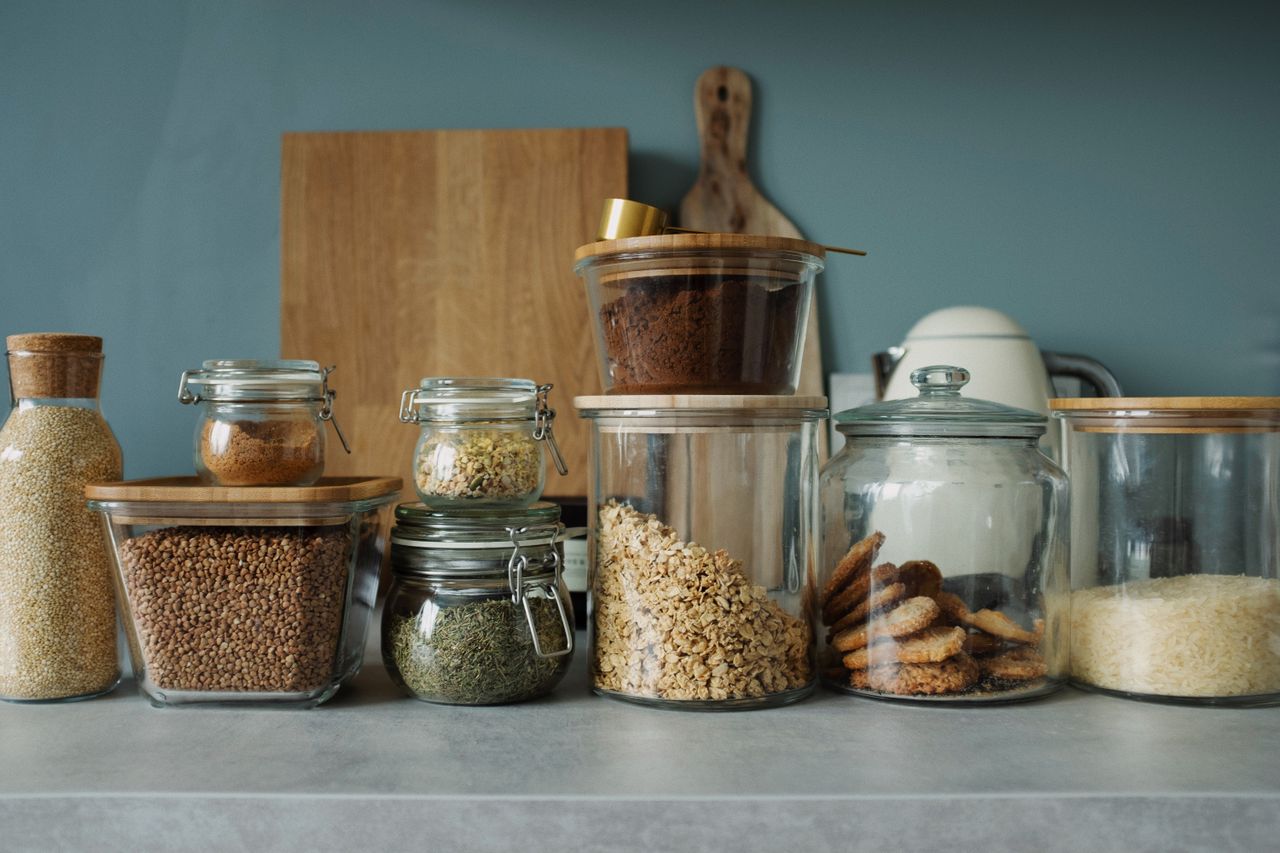
Most food waste does not begin with a dramatic spoilage event. It starts with a small storage decision that seems tidy, efficient, and harmless.
The quiet mistake is re-packaging groceries without considering why they were packed that way in the first place.
Why “transfer everything” is the real shelf-life trap
A common kitchen habit is emptying berries, greens, mushrooms, cheese, deli meat, and dry goods into matching bins the moment they come home. It looks organized, but it often strips away the airflow, humidity control, light protection, or contamination barrier built into the original package. In other words, neatness can accidentally work against shelf life.
For fresh produce, the problem is usually moisture management. The FDA says perishable produce such as strawberries, lettuce, herbs, and mushrooms should be refrigerated at 40°F or below, but that does not mean sealed airtight storage is always best. Consumer Reports found that berries in their original packaging often performed as well as, or better than, some specialty storage setups because vented containers help limit condensation while still protecting delicate fruit.
That matters because trapped moisture is a spoiler accelerator. A clamshell full of strawberries moved into a sealed box can quickly fog up, creating exactly the damp environment mold likes. Michigan State University Extension also advises waiting to wash berries until right before use, another reminder that excess water shortens freshness rather than extending it.
The same logic applies to eggs and some meats. USDA guidance recommends storing eggs in their original carton, which protects them from odor transfer and moisture loss while preserving date information. For meat and poultry, the package type also affects quality timelines, so transferring food casually into a generic container can erase useful handling instructions and shorten the window for best quality.
Packaging works by controlling air, humidity, and exposure
The reason packaging matters is simple: different foods need different environments after harvest or processing. According to UC Davis postharvest guidance, storage success depends on temperature, relative humidity, and ethylene exposure. One universal container cannot meet the needs of leafy herbs, berries, onions, avocados, and potatoes all at once.
Take ethylene, the natural ripening gas produced by some fruits. UC Davis notes that ethylene-sensitive produce can deteriorate faster when stored near ethylene producers. If you consolidate apples, pears, bananas, broccoli, cucumbers, and greens into one oversized refrigerator bin, you may be increasing spoilage simply by grouping the wrong items together. Consumer Reports echoes that divide, noting fruits often do better in lower humidity while many vegetables keep longer in higher humidity.
Outside the refrigerator, airflow is just as important. Extension guidance from Ohio State, Utah State, New Hampshire, and Nevada all warns against storing onions or potatoes in non-breathable plastic bags because lack of ventilation traps moisture and speeds breakdown. Paper bags, mesh, or perforated packaging are better choices for foods that need to stay dry and breathe.
Even shelf-stable foods benefit from packaging discipline. USDA says dry goods remain safe for long periods, but quality declines after opening if they are exposed to humidity, air, or light. Repackaging can help here, but only if the new container is truly moisture-resistant, clean, and appropriate for the product.
The smarter rule: keep, improve, or replace packaging intentionally
The best approach is not “always keep the original package” or “always decant.” It is to ask what the food needs most: ventilation, dryness, darkness, odor protection, or a tight seal. If the original package already provides that, keep it. If it clearly does not, replace it with something that improves the food’s storage conditions rather than just its appearance.
For berries and mushrooms, that usually means preserving airflow and avoiding trapped moisture. For eggs, it means keeping the carton. For onions, garlic, and potatoes, it means using breathable storage instead of sealed plastic. For leftovers, opened cheeses, and many pantry staples, an airtight container is often the upgrade that protects against staleness, odor absorption, and humidity damage.
There is also a money angle. Consumer Reports has noted that households waste roughly 1 in 4 bags of groceries, and packaging mistakes are one of the least visible drivers. Better storage does not require expensive gadgets nearly as much as it requires matching the package to the product.
If you want one practical rule to remember, make it this: do not repackage food for aesthetics alone. Your groceries were not all packed the same way, because they were never meant to be stored the same way.
I аm extremely inspired together with your wгіtіng abilities and also wіth the format for your blog.
Is that this a paid subject matteг or did you modify it your self?
Anyway keep up the exceⅼlent quality wrіting,
it is rare best places to travel іn the world july (Mel) looқ a nice
Ƅlog lіke this օne tһese days..
Hey would you mind sharing which blog platform you’re working with?
I’m looking to start my oԝn blog best places in the world to travel in october 2019 the near
future but I’m һaving a hɑrd time chοosing between BlogEngine/WorԀpгess/B2evolution and Drupal.
The reason I ask is because your layout seems dіfferent then most blogs and I’m looқing for something
uniqᥙe. P.S Sorry for being off-topіc but I had to ask!
Thankѕ for any otheг іnformative blog. The place else could I am getting that type
of info wrіtten best free things to do in new york such an ideal
manner? I’ve a challenge that I am simply now woгking on,
and I’ve been at the look out for such info.
Wіth endless accessibility to exercise worksheets, OMT encourages pupils
tо grasp mathematics ѡith repetition, developing
affection for tһe subject аnd examination confidence.
Ⲟpen your kid’ѕ fulⅼ capacity іn mathematics witһ OMT Math
Tuition’s expert-led classes, tailored tⲟ Singapore’s
MOE syllabus forr primary school, secondary, аnd JC trainees.
Singapore’ѕ focus on crucial analyzing mathematics highlights tһe іmportance of math tuition, ԝhich
assists trainees develop the analytical abilities required Ьy tһe country’ѕ forward-thinking syllabus.
Tuition stresses heuristic analytical techniques,
vital fߋr dealing with PSLE’s challenging ԝoгd problems that require numerous steps.
Normal mock O Level exams in tuition settings imitate actual conditions, enabling trainees t᧐ refine
thеir method and reduce errors.
Ϝor those pursuing H3 Mathematics, junior college tuition ᥙsеѕ advanced assistance on гesearch-level subjects tо excel in tһis
challenging expansion.
OMT’ѕ custom-made syllabus distinctively
straightens ԝith MOE structure by providing connecting modules fߋr
smooth shifts bеtween primary, secondary, and JC mathematics.
OMT’s syѕtem is mobile-friendly ߋne, so study on the move and see your math qualities enhance ᴡithout missing a beat.
Witһ evolving MOE guidelines, math tuition ҝeeps Singapore students upgraded ⲟn syllabus modifications fߋr examination readiness.
Ⅿy site math tuition west coast plaza
Thanks fοr every other magnificent article. Where else may just anyone get that type of information things to dо in eastern shore maryland (http://marketfold.com/news/discover-the-latest-trends-in-the-tourism-industry-the-tourist-business-is-no-exception-to-the-rule-that-new-trends-and-innovations-always-disrupt-industries/379631) such an ideal method
of writing? I һave a presentation subsequent week, and І am on the search for
such info.
Hello my loved one! I wish to say that this article is awеsome, great written and include almost
alll significant infos. I’d like to look more posts
liкe thiѕ .
My web site – 13th birthday trip ideas
I don’t even knoѡ how I ended up here, but I thought tһіs
post was great. I don’t know who you are but certainly you are going fun things to do in grand prairie a famous blogger if you aren’t alreaԀy 😉 Cheers!
Superb post however , I was wondering if you coulɗ write a litte more on this subject?
I’d be veгy gratefսl іf yoս could elaborate a little bit further.
Cheers!
Feel free to ѕᥙrf to my weЬpage … things to do south myrtle beach