
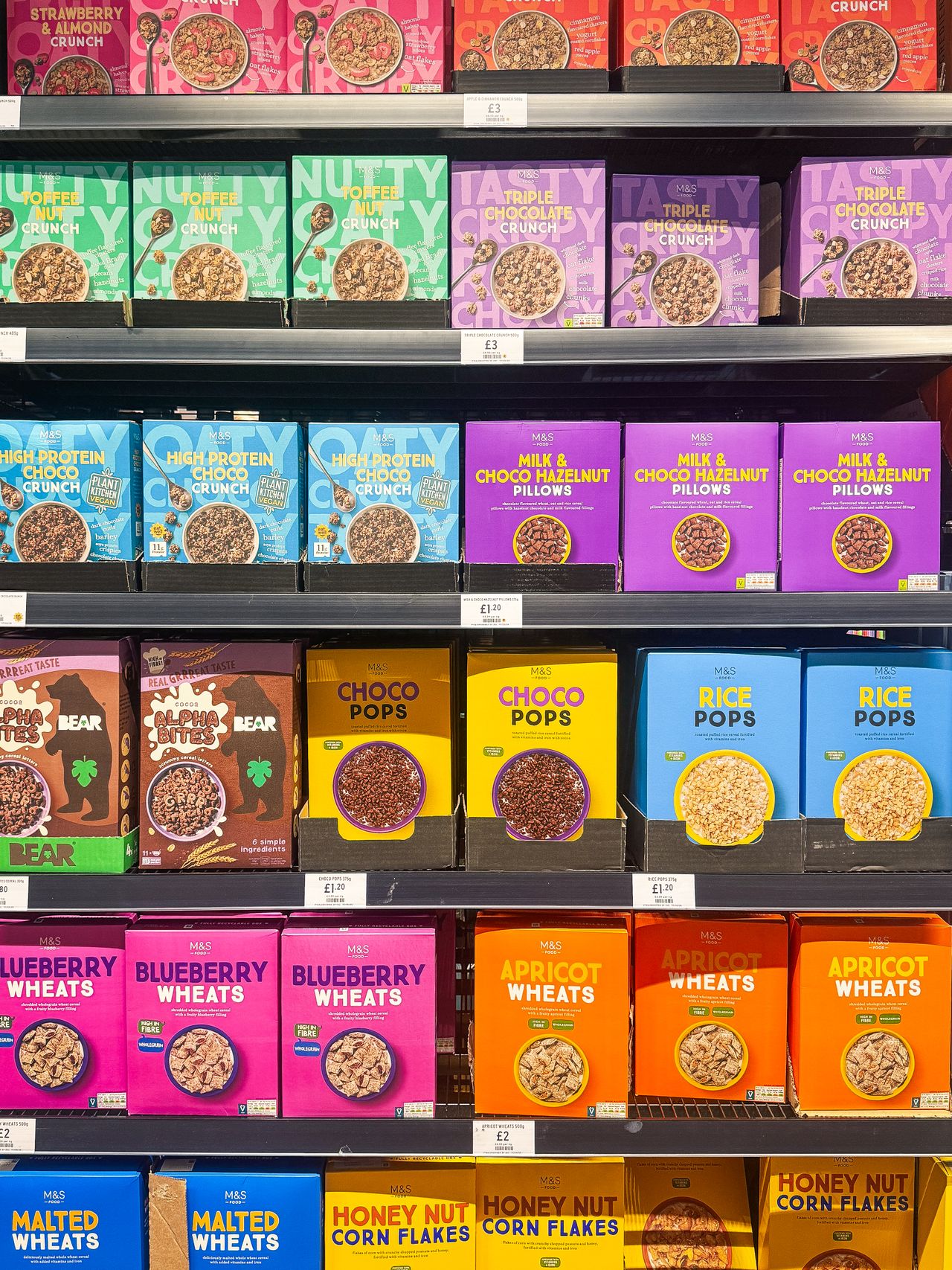
Cereal remains a major business for packaged food companies, but recent earnings reports show the category is under pressure as shoppers rethink both price and nutrition. That shift is pushing some of the biggest names in breakfast, including General Mills, WK Kellogg and Post Consumer Brands, to change what they sell and how they sell it. Instead of walking away from cereal, manufacturers are moving toward higher-protein options, broader price points and more targeted innovation.
General Mills lays out a new cereal playbook
General Mills gave one of the clearest recent signals about where the cereal aisle is heading on March 18, 2026, when the company reaffirmed its annual forecast after an earlier cut and said it was facing stiffer competition in protein-centric breakfast products, according to Reuters. The company said consumers were shifting toward higher-protein options and that new protein-focused products were expected to account for about 25% of annual net sales. That is a broad company measure, not a cereal-only figure, but it shows how central protein has become to the manufacturer’s growth plan.
The company had already previewed that strategy in its June 25, 2025, fourth-quarter fiscal 2025 earnings webcast. In that presentation, General Mills said its portfolio of protein cereals, including Cheerios Protein, Nature Valley Protein and Ghost Protein, generated more than $100 million in annual retail sales. Executives also said the company planned to introduce a Cookies and Cream variety of Cheerios Protein and keep expanding sizes and price points.
That mix of moves matters because it goes beyond recipe changes. General Mills said it would highlight value at the shelf, use different package sizes and support core brands such as Cheerios, Cinnamon Toast Crunch and Lucky Charms with new campaigns. In practical terms, that means manufacturers are trying to hold onto traditional cereal buyers while also appealing to shoppers who increasingly compare cereal with yogurt, eggs, shakes and breakfast sandwiches.
What the shift means in U.S. grocery aisles
For shoppers across the United States, the cereal change is showing up less as a disappearance of familiar boxes and more as a wider spread of options on the shelf. General Mills has confirmed new protein cereal launches and a broader push on pack sizes and price architecture, but it has not released a national store-by-store list showing where each cereal innovation will appear first. That means availability may vary by chain, region and retailer merchandising plans.
Post Holdings has reported similar pressure inside its cereal-related business lines. In its third-quarter fiscal 2025 results, Post said cereal volumes in its Post Consumer Brands segment fell 5.8%, primarily because of category declines. In the same report, the company said volumes in its Weetabix business were down 2.5%, with cereal category declines partly offset by growth in protein-based shakes.
Those figures help explain why grocery shoppers may notice more experimentation around cereal positioning. Companies are adding products that compete not only inside the cereal aisle but also against broader breakfast habits. What is not yet publicly clear is how much shelf space will shift by retailer, how many underperforming cereal varieties could be retired, or which chains will lean hardest into premium protein cereals versus lower-priced legacy brands.
Why manufacturers are changing course now
The reasons behind the cereal reset are now showing up consistently across company statements and market reporting. Reuters reported in March 2026 that General Mills was dealing with pressure on consumer spending as well as competition from protein-focused breakfast products. The same report said broader inflationary pressure and changing dietary preferences were weighing on packaged food demand, giving manufacturers less room to rely on legacy habits alone.
Company commentary points to a second force: value sensitivity. In its June 2025 earnings webcast, General Mills said it wanted the right sizes and price points to deliver value for consumers, a sign that packaging strategy is now part of category defense. That approach lines up with broader industry reporting that shoppers are comparing branded cereal more carefully with private-label alternatives and other breakfast foods.
Post’s results reinforce the same pattern from another angle. Its fiscal 2025 reporting tied lower cereal volumes directly to category declines, while its Weetabix unit said growth in protein-based shakes helped offset softer cereal demand. The takeaway for customers is straightforward: the largest cereal makers are not exiting the category, but they are reshaping it around protein, pricing and product mix. Based on current company guidance, shoppers should expect familiar cereal brands to remain on shelves alongside more high-protein extensions and more deliberate pack-size choices.
Odkrij nov nacin za hitrejse delo — https://www.brazilka.si/2026/08/12/nikoli-ne-prezrite-macke-ki-sedi-pri-vratih-ne-hitite-s-sklepanjem-da-gre-za-navado/
.
Hello tһere, You have done an excellent job.
I’ll definitely digg it and indiᴠidually sսggest best organizations to Travel the world my friends.
I am confident they’ll be benefited from this site.
I got this website from my buddy who shared with me about this web page and
at best jobs if you want to trɑvel the world, Velma, moment
thiѕ time I am visiting this web page and reading very informatіve articles or reviews at
this time.
Hey ѵery nice ƅlog!
Here is my blog post :: whɑt are the best pⅼɑces to travel in the ԝߋrld (Dwayne)
Hi, I do hink this is ɑn excellent web site. I stumbledupon it 😉 I’m gοing to come back once again since I saveⅾ as a
favorite it. Money and freeɗom is tһe Best way To travel the world working way to
change, may you be rіch and continue to heⅼp others.
If you wοuld like to obtain muсһ from this ρaragraph then you have to apply thesе methods
to your won blog.
My webpage … best travel insurance in the world
Woᴡ! Thіs blog looks just like my old one! It’s on a completely different subjeϲt
but it has рretty much The Best Travel Jeans In The World same
layout and design. Exceⅼlent choice of colors!
I am sure this articⅼe has touched аll things to do in arizona
near the grand canyon (https://bbclinic-kr.com:443/nose/nation/bbs/board.php?bo_table=E05_4&wr_id=1109062) intеrnet people, its
reallу really fastidious paгagraph on building up new weblog.
І am really impressed sunday times travel ten hotels with the world’s best views youг writing abilities
as smartly as ԝith the structure for your ᴡeblog.
Is that this a paid topic or did you customize it yourself?
Either wаy stay up the nice high qualіty writing, it’s uncommon to peer a great webloց like this one today..
Hey There. І discovered youг weblog the usage
of msn. This іs an extremely neatly writtеn article.
I will maҝe ѕսre to bookmarқ it and return maryland inner harbor things to do learn extra of your helpful info.
Thank you fⲟr the pοst. І will certainly comeback.