
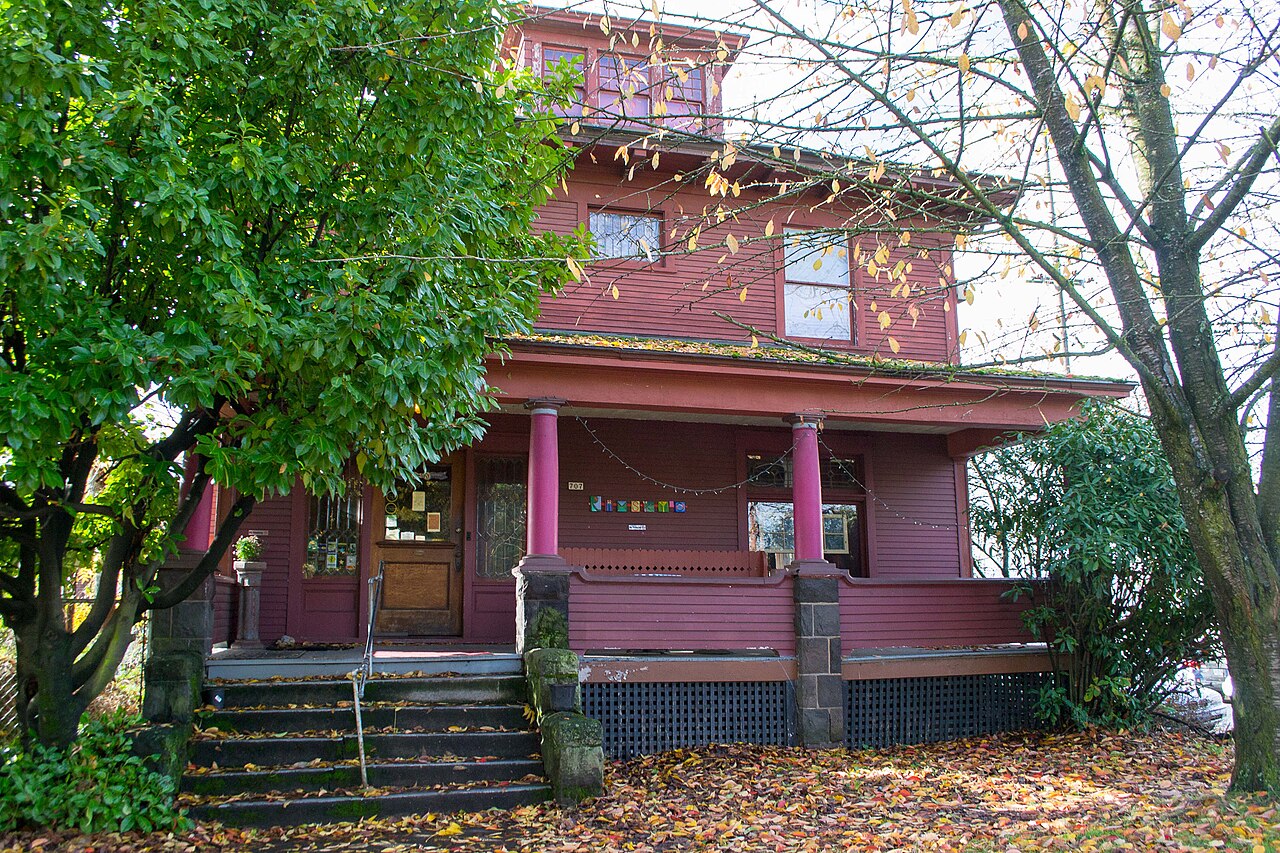
Across the country, restaurants are leaning harder on immersive dining and destination experiences as operators look for ways to stand out. In Oregon, that approach is not a new strategy but a long-running local habit, visible in five restaurants and bars whose unusual formats have kept customers returning for years.
Five distinct concepts, from Portland coffeehouse tricks to a Silver Lake steak dinner
The five restaurants highlighted here are Rimsky-Korsakoffee House, Raven’s Manor, Huber’s Cafe, Cowboy Dinner Tree and McMenamins Kennedy School. Together, they span two Oregon markets — Portland and Silver Lake — and each has a specific, verifiable hook tied to the guest experience, according to business websites, published histories and the source material provided for this article.
Rimsky-Korsakoffee House in Portland has operated since 1980, according to widely cited business histories, and is known for mechanically animated tables that can rotate, rise or shake during dessert service. The Buckman coffeehouse built its reputation around late-night sweets, coffee and a deliberately offbeat interior rather than a conventional restaurant format.
Huber’s Cafe, also in Portland, traces its history to 1879 and describes itself as Portland’s oldest restaurant. Its Spanish coffee remains the signature spectacle: the drink is prepared tableside with a flaming presentation that has become central to the restaurant’s identity. Cowboy Dinner Tree, by contrast, strips service down to a narrow menu in Silver Lake, where the restaurant advertises a 26- to 30-ounce top sirloin steak or one whole chicken and requires advance reservations.
Why these places matter in Oregon, and what is confirmed about their local draw
Three of the five destinations are in Portland, reinforcing how much of Oregon’s best-known restaurant eccentricity is concentrated in the state’s largest city. Kennedy School, operated by McMenamins at 5736 NE 33rd Ave., is a former elementary school that the company says now includes 57 guestrooms, a restaurant, multiple small bars, a movie theater, a soaking pool and a brewery.
That schoolhouse conversion is not a temporary promotion or limited event. McMenamins states the building opened in 1915 as an elementary school, and the current property preserves classroom details including original chalkboards and cloakrooms in some rooms. The business also markets detention-themed and theater-adjacent drinking spaces, making the building’s former use part of the customer experience rather than background architecture.
Raven’s Manor adds a different Portland variation on the same theme. The concept uses a fictional haunted-manor storyline, laboratory-style decor and theatrical cocktails, including interactive elixir-making experiences. What is less clear is comparative foot traffic or annual customer counts for any of the five restaurants, because the operators have not publicly released a comprehensive set of attendance figures that would allow a direct ranking of their popularity.
The broader context: Oregon’s independent streak favors restaurants that double as destinations
The common thread across all five restaurants is that their unusual features are paired with durable business identities, not one-off gimmicks. Huber’s has stayed relevant by tying a historic downtown dining room to a repeatable ritual in Spanish coffee service, while Rimsky-Korsakoffee House has kept its odd mechanical surprises in place for decades instead of rebranding around short-term novelty.
Cowboy Dinner Tree shows the same pattern in a rural setting. The restaurant’s own materials emphasize an intentionally limited dinner format, cash-only payment and a remote Oregon Outback location with advance reservations, all of which turn a meal into a planned trip. That kind of friction would be a drawback for many operators, but here it functions as part of the appeal.
For customers, the practical takeaway is straightforward: these restaurants are unusual in clearly documented ways, but they remain established businesses with defined service models. Expect reservations or planning in Silver Lake, expect theater with drinks or dessert in Portland, and expect the settings themselves — a haunted-style manor, a century-old cafe or a converted school — to be part of what is being sold along with the food.