
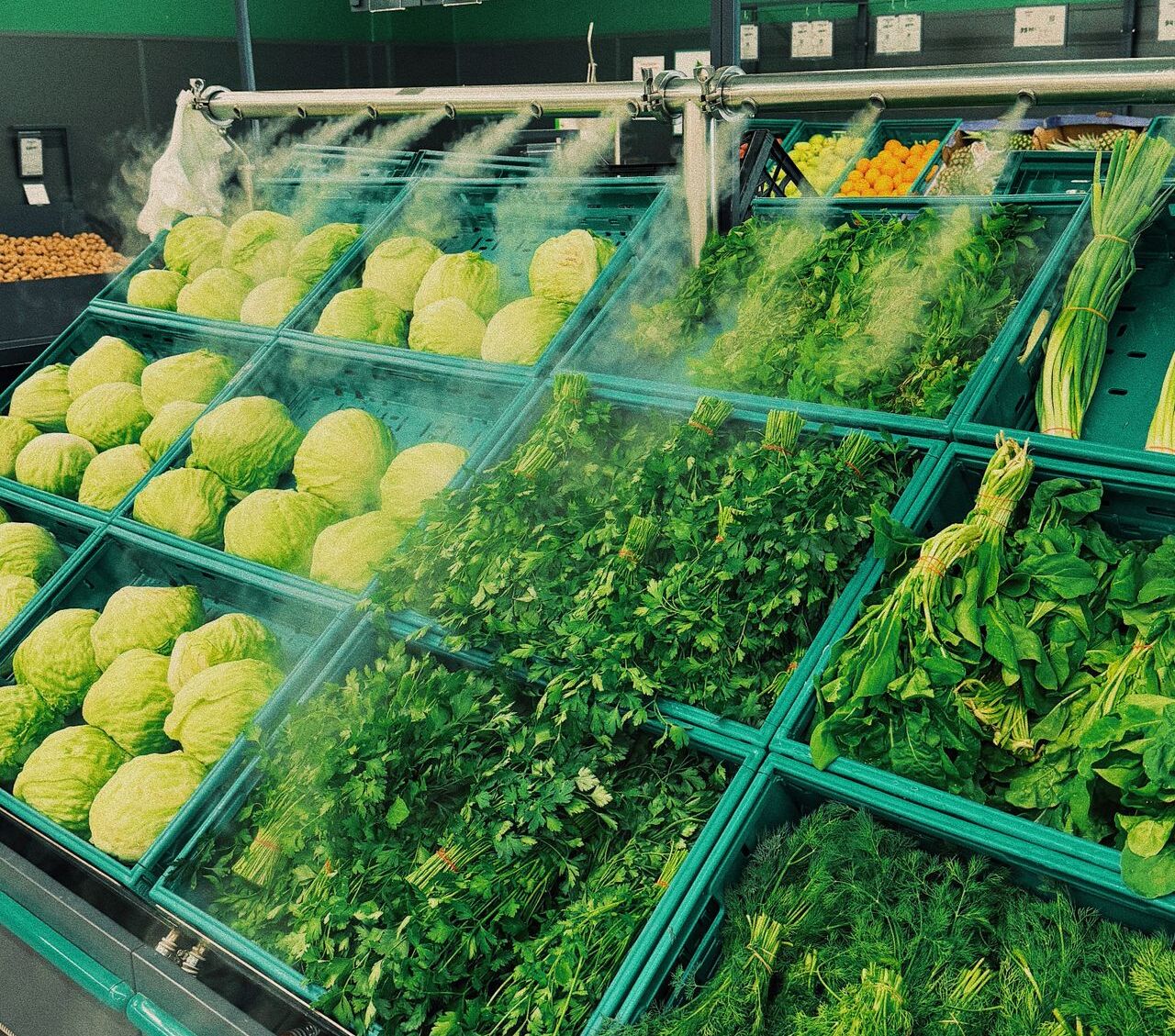
A produce aisle can look farm-fresh even when the vegetables have already spent days in storage. The secret is less about magic and more about moisture management. Stores know that a little water, used strategically, can make tired produce look far more appealing.
The real trick is moisture, not freshness
The most common trick is the misting system that periodically sprays leafy greens, herbs, broccoli, and other moisture-sensitive vegetables. According to NC State Extension, produce loses internal water after harvest, and that loss of turgor is what causes wilting, dullness, and limp texture. High humidity around the display slows that process, which is why supermarkets keep these items in cool, damp cases rather than dry open air.
Research in food science has shown why the method works so well visually. Studies on retail misting and humidification found that water-rich produce under mist loses less weight, stays crisper longer, and shows slower deterioration in appearance than produce displayed dry. One widely cited retail study found humidification could cut weight loss dramatically, in some cases by nearly 50%, while preserving firmness and visual quality.
That sounds like produce is being “brought back to life,” but the science is more limited. NC State Extension notes that surface misting and high humidity can slow further water loss, yet they do not truly restore moisture already lost from the plant tissue. In plain terms, the lettuce may look perkier under a cool spray, but that does not mean it is as fresh as recently harvested lettuce.
Crisping can improve appearance, but it has limits
Beyond in-case misting, retailers sometimes use a practice known as crisping. USDA-backed food safety research describes crisping as soaking a commodity in water to rehydrate it before putting it back on display. That can make leafy vegetables feel firmer and look greener, which is exactly why the practice is tied so closely to consumer perception at the shelf.
The distinction matters because shoppers often read visual cues as proof of freshness. A glossy head of romaine or a bunch of kale covered in droplets appears lively, while dry leaves signal age. Yet a fine mist mainly changes the microclimate around the produce and the way the surface looks under store lighting. It can reduce shriveling and preserve saleable weight, but it cannot erase every sign of age, nutrient decline, or time spent in transit.
There is also a business reason stores rely on the technique. Produce naturally loses saleable weight as water evaporates, and that directly affects profit. Humidification helps retailers hold inventory longer, reduce shrink, and keep displays attractive without resorting to constant restocking. In that sense, the “fresh again” effect is not exactly deception, but it is absolutely merchandising science at work.
What shoppers should know before buying
The biggest takeaway is that misted produce is not necessarily unsafe or low quality. In fact, controlled humidity is a standard postharvest tool, and extension specialists routinely recommend cold temperatures with high relative humidity for leafy greens. The issue is that appearance can overpromise. A revived-looking bunch of parsley may still be closer to the end of its useful life than its color and sheen suggest.
Food safety experts also stress that water itself must be clean. The FDA says whenever water comes into contact with fresh produce, its quality affects the potential for contamination. USDA research has likewise noted that misting or crisping systems can create risks if water lines, tanks, or equipment are poorly maintained, which is why sanitation practices matter as much as presentation.
For shoppers, the best defense is to inspect beyond the shine. Look for blackened stems, slimy patches, yellowing ribs, soft spots, or excess water pooling in leaves. If the produce feels heavy, crisp, and smells clean, it is usually a better bet. And even if it looks freshly misted, USDA evidence still supports washing produce at home under running water before eating it.