
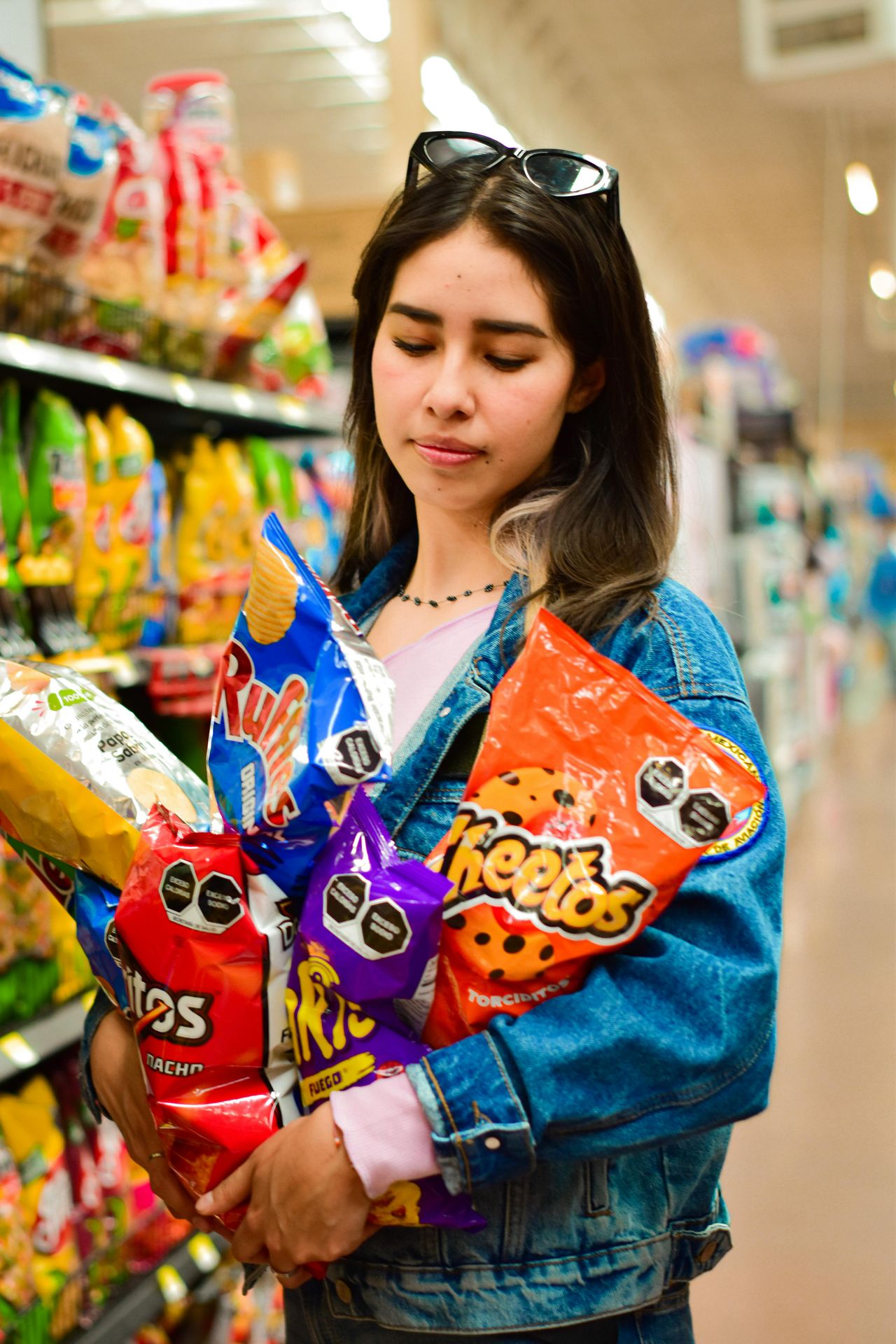
The snack aisle looks bigger than ever. In reality, it is starting to think smaller.
Behind the explosions of flavor, “better-for-you” claims, and protein-packed relaunches, major brands are increasingly designing products for the same person. That convergence is not just a marketing quirk. It is changing how food companies formulate products, price them, and decide which consumers matter most.
The snack industry has settled on a single high-value target

If you zoom out, the biggest snack companies are no longer chasing totally different audiences. They are pursuing a remarkably similar customer: someone who wants indulgence without guilt, convenience without boredom, nutrition without sacrifice, and a price that still feels justified in an anxious economy.
That customer is not defined by age alone, though younger adults are central to the strategy. It is a mindset buyer: label-aware, socially influenced, increasingly skeptical of marketing, and obsessed with getting more from every bite. NielsenIQ reported in May 2025 that 53% of consumers across 19 countries planned to buy more high-fiber foods in 2025, while around 40% planned to buy more superfoods, high-protein plant-based foods, or probiotic foods. The same report found 82% wanted more transparency in labels, and 62% said they were more skeptical of health claims from food companies. Those numbers explain why snack brands now sound eerily alike. According to NielsenIQ, wellness, personalization, and transparency are moving from trend territory into baseline expectations.
The proof is visible in corporate behavior. PepsiCo has explicitly tied new snack development to protein and functional ingredients, launching PopCorners Protein in May 2026 with 9 grams of protein per serving and signaling broader protein expansions across brands including Doritos. Company statements and earnings materials repeatedly describe protein as a scaled consumer trend, not a niche experiment. Kellanova has also highlighted protein-rich extensions such as Nutri-Grain Power-Fulls, while continuing to position its brands around trend-driven innovation across convenience and foodservice channels.
Mondelez is approaching the same customer from a slightly different angle: mindfulness and portion control. Its June 17, 2025 State of Snacking release said 96% of global consumers engage in mindful snacking behaviors, 79% say they appreciate snacks more when consumed mindfully, and 69% look for portion-controlled snacks. Mondelez also says approximately 94% of its 2025 net revenue came from mindful-portion snacks. That is not a fringe positioning strategy. It is a giant global company reorganizing its business around the same consumer logic guiding rivals: pleasure, control, and a health halo that does not kill the treat.
Protein, fiber, and “functional” claims are becoming the new universal language
Walk through any grocery store and the pattern is impossible to miss. Traditional chips want to be protein carriers. Crackers want to signal smarter satiety. Sweet snacks want to borrow the language of performance nutrition. The result is a market where brands increasingly speak in the same shorthand: protein, fiber, gut health, clean label, energy, portion awareness.
That shift is partly defensive. The FDA updated its definition of the voluntary “healthy” claim in December 2024, aligning it more closely with current nutrition science and the modern Nutrition Facts label, including attention to added sugars. The agency has also been exploring front-of-package nutrition labeling, which raises the pressure on packaged-food makers to simplify and strengthen their claims. At the same time, the Scientific Report of the 2025 Dietary Guidelines Advisory Committee identifies lower intake of added sugars, sodium, and sweetened or savory snack foods as favorable to health. In plain English, the policy climate is nudging snack makers toward formulations and messaging that look more nutritionally responsible on the front of the pack.
There is also a powerful cultural force behind it. Mintel said for 2025 that consumers are becoming more focused on blood sugar, hormone health, and simplified claims around protein, fiber, vitamins, and minerals. Importantly, Mintel connected that trend not only to wellness-minded shoppers generally but also to consumers using weight-loss drugs who are looking for foods that fit individualized needs. NielsenIQ found that 43% of consumers globally would consider anti-obesity medication if recommended by a healthcare provider, while 39% view ultra-processed foods negatively and North Americans rank among the most concerned. That combination helps explain why even legacy junk-food brands are trying to sound useful now.
Circana has framed the U.S. snack market in 2026 as a “new era of function, fuel and fun,” saying consumers are eating more frequently, more intentionally, and with higher expectations. Snacks are increasingly replacing meals and becoming embedded in daily routines, which makes their nutritional framing more important than it used to be. Once snacks become breakfast, desk lunch, post-workout recovery, or late-night self-care, every bag and bar has to justify itself more aggressively. That pressure pulls nearly every major brand toward the same promise: this is not just a snack, it is support.
The scary part is not the overlap — it is the narrowing of consumer imagination

On the surface, this convergence looks harmless. If brands are making snacks with more protein, more fiber, clearer labels, and smaller portions, that sounds like progress. The problem is what gets lost when every giant company optimizes for the same ideal shopper.
First, variety starts to shrink in a subtler way than consumers notice. Shelves may still look crowded, but the underlying logic becomes repetitive. Instead of radically different food philosophies, shoppers get dozens of versions of the same pitch wrapped in different brand colors. Bold indulgence is reframed as “permissible indulgence.” Convenience becomes “functional nourishment.” Even fun is tested against whether it can carry a health-forward story. When companies all read the same trend reports and answer to the same retail pressures, true diversity in product thinking gets replaced by managed differentiation.
Second, this model favors the consumers with the highest spending power and the loudest influence over culture. NielsenIQ has noted that premiumization potential sits alongside wellness-focused portfolios, while its broader analysis of consumer markets emphasizes polarization and “noticeable disparities.” In practice, that means snack innovation often centers on shoppers willing to pay more for added protein, cleaner labels, ethical sourcing, or socially resonant branding. Budget shoppers still matter, but often as an efficiency problem, not as the source of the most exciting innovation. PepsiCo’s 2025 remarks acknowledged consumers remain value-conscious, even as the company discussed investments in enhanced products with protein, fiber, and whole grains. The tension is obvious: brands want to serve affordability and aspiration at once, but the aspirational buyer usually shapes the narrative.
Third, the sameness is psychologically manipulative. Consumers are told they are making highly personalized choices, but the menu of choices is increasingly engineered from the top down. A handful of massive companies are deciding that the future consumer wants function, mindfulness, transparency, and convenience in nearly identical proportions. That is not personalization in the deepest sense. It is standardization disguised as self-expression.
Retailers, algorithms, and social media are pushing brands into the same lane
Big snack companies are not converging by accident. They are being pushed there by the way products are now discovered, evaluated, and rewarded. Retail data systems, search habits, retailer shelf strategies, and social platforms all favor claims that are easy to scan and easy to compare.
If a shopper is looking online or in-store for a “high protein snack,” “low sugar snack,” or “portion controlled snack,” the brand that communicates in plain, standardized benefit language has an advantage. That naturally penalizes products that are harder to explain in a quick digital moment. The shopper may still care about taste, nostalgia, or curiosity, but the first hurdle is usually discoverability. Functional claims are becoming the universal metadata of the snack aisle.
Kellanova has openly discussed the growing role of technology in the consumer journey, including its use of AI and the sharp increase in effectiveness of salty-snack promotions from 2024 to 2025. NielsenIQ has similarly argued that AI will increasingly shape premiumization and personalized recommendations. Once data tools begin rewarding certain signals, companies get a feedback loop: products with the clearest claims earn more visibility, which leads to more launches built around those claims. The market then starts teaching itself that only a narrow type of snack innovation deserves scale.
Social media intensifies the effect. Kellanova has tied Cheez-It innovation to a measurable rise in crunchy snack social videos, showing how sensory trends can turn into product strategy. But even those sensory moments are now often fused with the same benefit language dominating health and wellness. A snack cannot simply be crunchy or delicious. It increasingly needs to be crunchy and protein-forward, indulgent and portion-aware, viral and ingredient-conscious. What looks like more creativity can actually be more constraint, because every product idea has to pass through the same optimization filters before it reaches consumers.
Retailers like that logic because it simplifies shelf organization and category selling. Investors like it because it creates cleaner stories about growth. Brands like it because it reduces the risk of being out of step with consumer mood. But society should be more suspicious of a food system where discovery, merchandising, and product development all steer toward the same archetypal buyer.
What consumers should watch as snack brands keep closing in on the same buyer

The most important question is not whether snack brands will continue down this road. They will. The real question is how far the convergence goes before shoppers begin to notice the trade-offs: higher prices for marginal nutritional upgrades, fewer truly distinct products, and a constant flood of “better-for-you” messaging that can blur the difference between genuinely improved food and smart repackaging.
Consumers should watch for three signs. The first is claim inflation. When every brand adds protein, fiber, gut-health language, or mindful-portion cues, the category starts to train people to treat these words as proof of overall quality. They are not. A product can contain extra protein and still be heavily processed, expensive, or nutritionally unbalanced. The FDA’s evolving labeling framework is partly an attempt to make these distinctions clearer, but marketers will keep testing how far a health-adjacent message can stretch.
The second is portfolio camouflage. Companies increasingly keep indulgent legacy brands while launching adjacent “smarter” versions that borrow trust from the original. PopCorners Protein, Nutri-Grain Power-Fulls, and the broader proteinization of mainstream snacks illustrate how legacy equity is being used to ease consumers into functional positioning. This can be useful, but it also means the biggest companies get to dominate both sides of the market: the classic treat and the upgraded alternative. Smaller brands may create the trend, then watch conglomerates absorb it.
The third is consumer sorting. As wellness-coded snacks become more expensive and more culturally dominant, people who cannot or do not want to buy into that language may be treated as secondary. That is the unsettling core of the story. The snack industry is not just selling food. It is sorting shoppers into who deserves innovation, who deserves aspiration, and who gets the stripped-down value tier.
That is why this moment feels bigger than chips and crackers. When every major snack brand chases the same customer, the food system becomes less pluralistic than it appears. The aisle still looks crowded. The imagination behind it does not.